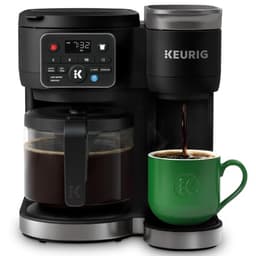
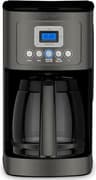
The three rental-specific tests
Judge every candidate on these before you look at the coffee it makes. A home machine only has to satisfy you; this one has to satisfy a stranger you will never meet.
- What does a guest have to understand? One button is the target. A pod machine passes because the pod is the dose, the instructions are the shape of the machine, and there is nothing to measure. A drip machine passes if the carafe, the water line and the switch are all obvious. Anything requiring a ratio, a grind size or a technique fails — not because guests are incapable, but because they are on holiday and did not come to learn.
- What can run out? This is the one hosts underestimate. Paper filters are the classic rental failure: the machine works, the guest has no filter, and there is nothing you can do about it remotely. A machine with a permanent filter removes that failure mode entirely — the Ninja CE451 below ships with a reusable filter and needs no paper at all. Pods are the other option: easy to stock, easy to count, and you can see at a glance whether the basket is empty.
- What can break? Glass. Glass carafes, glass French press beakers and glass pour-over servers are the parts that get knocked off a counter, and in a rental that is a question of when rather than if. Either buy a machine with a thermal or stainless component, or treat the glass part as a consumable and keep a spare in the cupboard. A cheap French press is a good rental brewer partly because replacing it costs very little.
How the six compare on the rental tests
| Brewer | Guest has to | Can run out | Breakable part |
|---|
| Keurig K-Duo (Gen 2) | Drop a pod, or fill the basket | Pods, or ground coffee | Glass carafe |
|---|
| Keurig K-Elite | Drop a pod, press once | Pods only | None in normal use |
|---|
| Ninja Fresh Brew (CE451) | Add coffee and water, press once | Ground coffee (no paper filters) | Glass carafe |
|---|
| Cuisinart DCC-3200 | Add coffee and water, press once | Ground coffee, filters | Glass carafe |
|---|
| Bialetti Moka Express | Use a stove, judge the heat | Ground coffee | Nothing — it is aluminum |
|---|
| Bodum Brazil press | Boil water, wait, plunge | Ground coffee | Glass beaker (cheap to replace) |
|---|
Read down the “guest has to” column and the ranking explains itself. The moka pot and the French press make better coffee than the pod machine and ask more of the person using them, which is exactly the wrong trade in a rental you are not standing in.
Pods in a rental: the honest case for and against
For: nothing to measure, nothing to clean, one button, and a stock level you can check in a photo. Against: cost per cup, and waste. Those are both real.
On cost, do the arithmetic rather than guessing. Divide a pod box price by its pod count for cost per pod, then divide a bag of ground coffee by the cups it makes — the National Coffee Association’s Golden Ratio is one to two tablespoons per 6 oz of water, so a 12 oz bag is somewhere around 28 to 34 cups. Multiply both by the cups a guest actually drinks. For a rental the gap is usually smaller than hosts fear, because guests brew far fewer cups than a household does and you are buying coffee for a few days at a time, not every week.
On waste, Keurig states that “Since 2020, all Keurig K-Cup Pods have been recyclable” and that they are made from recyclable polypropylene, but also publishes the caveat that they are “Not recycled in many communities; check locally to see if K-Cup Pods are accepted in your community”, with the steps being peel and bin the lid, compost or bin the grounds, then recycle the cup if your area takes it. In a rental, a guest will not do three steps. If waste is something you care about, the honest answer is a drip machine with a permanent filter, not a pod machine with good intentions. Keurig vs Nespresso covers which capsule system to standardize on if you do go pods — for a rental, K-Cups win on availability, since a guest can buy them in any supermarket.
Why not an espresso machine, even in a nice listing
Because espresso is a skill, and the NCA’s own description of it is a list of things that can go wrong: nearly boiling water forced through a fine grind at high pressure, roughly 1:2 dry coffee to liquid, over 20 to 30 seconds. Grinding, dosing, tamping and milk steaming are four separate techniques. A guest who has never used that machine will produce a bad drink and a mess, and the machine will be out of adjustment for the next guest.
If the listing genuinely needs an espresso-style option — a luxury apartment, a city stay where it is part of the appeal — use a capsule machine instead. It makes the same drink for every guest with no technique at all, which is the entire argument in Nespresso vs an espresso machine. The same reasoning applies to grinders: do not leave whole beans and a grinder in a rental. Leave ground coffee, or pods.
What to leave beside the machine
This matters more than the machine, and it is the cheap half of the job.
Coffee that is obviously for guests, in a sealed container. Ground, medium roast, nothing unusual — a medium roast is the least likely to be wrong for a taste you do not know. Light vs dark roast covers that choice. Store it properly between stays: the NCA lists air, moisture, heat and light as coffee’s greatest enemies and puts ground coffee at one to two weeks of freshness at room temperature, so a bag left open since the last guest is stale by definition. An airtight canister fixes it and looks better on the counter than a clipped bag.
A spare of whatever runs out. Filters if the machine needs them, a second box of pods if it does not. Put them where a guest will find them without opening every cupboard.
One printed line, not a manual. Something like “Coffee: add water to the line, press the big button”. A laminated card beside the machine prevents most messages about it.
Mugs that match the machine’s output. Four mugs minimum, tall enough for the cup size the machine actually brews. Best coffee mugs has sets, and a travel mug is a genuinely nice touch for guests leaving early — see best travel coffee mugs.
Descaler, and a reminder to use it. Nobody descales a rental, which is why rental coffee eventually tastes wrong even with a good machine. The NCA’s drip guidance is to descale “at least every 3-6 months” to clear mineral buildup from tap water, and in a rental on back-to-back stays that is a real schedule, not a theoretical one. How to descale a coffee maker is the walkthrough — put it on the same list as changing the sheets.
One last thought if the rental is a cabin or anywhere the power is unreliable: keep a French press or a moka pot in the cupboard as the backup. Both work with nothing but hot water or a stove, both cost very little, and a guest who finds one during an outage will mention it in the review for the right reasons. For the wider field of brewers that need no electricity, see best travel coffee makers.