Automatic wand, one-touch jug, or manual steam: pick the person, not the spec
This is the entire decision, so it is worth two minutes. Milk for a latte or a cappuccino is not just hot milk — steam has to heat it and spin air into it until the bubbles are too small to see. Do it right and you get microfoam, which is why cafe milk pours as a single glossy liquid instead of a layer of froth sitting on a layer of milk. Do it wrong and you get warm milk with a head of bath foam on top. Every machine below is a different answer to the question “who does that job?”
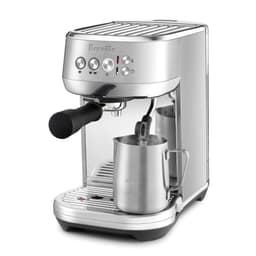
- Automatic steam wand — the machine does it, in a jug. The Bambino Plus and the Vertuo Creatista. You pour cold milk into the jug, drop the wand in, choose a temperature and a texture, and press. It stops on its own. Breville publishes three temperatures and three texture levels for both. This is the sweet spot for a gift: no skill needed on day one, and the manual option is still there later.
- One-touch milk system — the machine pours the drink. The Lattissima One. Fresh milk goes into a single-serve jug that clips onto the machine; one button delivers coffee and milk into the cup in the right order. Nothing to hold, nothing to judge. The trade is that you are buying a capsule machine, so the coffee comes from a sealed pod rather than beans you choose.
- Hands-free frothing presets — a variation on the above. The Ninja Luxe Café Premier. SharkNinja publishes four hands-free froth presets — steamed, thin, thick and cold foam — with steaming and whisking combined rather than a wand you aim.
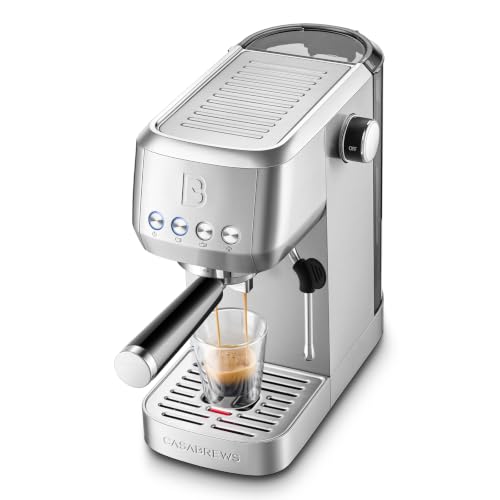
- Manual steam wand — they do it. The Barista Express and the CASABREWS 3700. Breville lists the Barista Express as manual milk texturing, and the CASABREWS ships a frothing wand. In practice this means angling the wand to pull air in, listening for the right sound, and getting it wrong for a week or two. For someone who wants that, it is the best milk on the page. For someone who does not, it is the reason the machine stops getting used.
One honest note on the two capsule machines. They are on this page because they genuinely answer the query — the milk side is excellent and needs no skill — but they are not espresso machines in the sense of grinding and dosing coffee. If that distinction matters to the person receiving it, read Nespresso vs an espresso machine before you buy, because it is the one gift mistake in this category that cannot be fixed with a bag of better beans.
The four other things worth checking
Once you have chosen who does the frothing, these are the specs that decide whether the machine stays on the counter.
- Does the milk part have to be cleaned after every drink? A wand gets wiped and purged, which takes five seconds. A pumped milk system has a path through the machine and needs rinsing, which is why the Lattissima One’s detachable, dishwasher-safe jug is a bigger deal than it sounds — the milk comes off the machine and goes in the fridge or the dishwasher. A milk system that is annoying to clean is a milk system that gets abandoned.
- Does it heat fast enough for a weekday? Breville puts the Bambino Plus on the same ThermoJet system as the standard Bambino, which Breville states reaches extraction temperature in three seconds. A machine with a long warm-up gets used at weekends only.
- Is there a grinder in the picture? Only the Barista Express and the Luxe Café Premier grind. The Bambino Plus and the CASABREWS need either a separate grinder or pre-ground coffee — see best coffee grinders, and budget for it, because a great machine fed supermarket pre-ground is a waste of the machine.
- How tall is it with the cabinet above? SharkNinja lists the Luxe Café Premier at 15.75 x 15.24 x 20.51 inches, which is taller than most wall cabinets allow. Measure before you buy anything in this category; a machine that has to be pulled out to be filled gets used for a month.
What to put in the box with it
A milk machine needs two things on day one that it does not come with. The first is a jug — the Bambino Plus and the Creatista include one, the CASABREWS and the Barista Express do better with a proper pitcher, and a stainless pitcher is the cheapest upgrade in all of coffee. Our espresso accessories page covers pitchers, tampers and the rest.
The second is beans, for every pick except the two capsule machines. Espresso wants a darker, espresso-labelled roast for a reason that has nothing to do with snobbery: it is more forgiving of a grind that is slightly off, which is exactly the position a new owner is in. Best espresso beans is the short list, and how to make a latte at home is the walkthrough to tuck into the card — it covers the milk side in detail, including the bit everyone gets wrong first (you stop adding air long before the jug is hot).
Last thing, and it applies to every machine here: cold milk froths better than milk that has been sitting out, and whole milk froths more easily than skim. If you are writing a note, that one sentence is worth more than any accessory.