Drip & Dose

The Best Turkish Coffee Pots

A cezve is the cheapest way to give somebody a whole new brewing method. Four picks: two pots, the cups the drink is served in, and the extra-fine coffee that makes the whole thing work.

By Stephen V.Last updated How we choose

The best Turkish coffee pot to give is the DEMMEX hand-engraved copper cezve — copper, the traditional material, in a three-serving size with a wooden handle and a spoon included, so the present is complete in the box. The budget pick is the Volarium hammered copper cezve, which does exactly the same job for roughly the price of two bags of beans.

Read this before you buy either of them, because it is the one way this gift fails: Turkish coffee needs coffee ground to a powder, finer than espresso. UNESCO’s inscription of Turkish coffee culture describes the method plainly — the freshly roasted beans are ground to a fine powder, then the ground coffee, cold water and sugar go into the pot together and it is brewed slowly on a stove to produce the desired foam. Nearly no home grinder goes that fine. So a cezve on its own is half a gift; a cezve with a tin of extra-fine ground coffee is the actual drink.

That is why this page is four picks rather than six: two pots worth owning, the cups it is traditionally served in, and the coffee that solves the grind. Prices come from the live price layer on each button, stamped with the date they were pulled.

How this is funded: we earn a commission if you buy through our links, at no extra cost to you. It never changes which gift we recommend, and we’ll tell you plainly when to skip one. Full disclosure.

Quick picks

Sorted by who each one suits, with a live price you can act on. Tap a row to jump to the full write-up. We haven’t lab-tested these — here’s exactly what we do instead.

#ProductBest forPrice
1
DEMMEX Copper Cezve / Ibrik, 3 servings

DEMMEX Copper Cezve / Ibrik, 3 servings

A hand-made, hand-engraved copper cezve from Turkey with a wooden handle and a matching spoon. Copper is what the traditional pot is made from because it heats fast and evenly, which is the whole trick with a brew you lift off the heat by eye.

Best overall
$43.99 · View on Amazon

Price as of November 23, 2026. #ad How we’re funded

2
Volarium Hammered Copper Cezve (small)

Volarium Hammered Copper Cezve (small)

A hammered copper cezve at the price of a couple of bags of beans. It does the same job as the engraved pots: small, narrow at the neck so the foam has somewhere to build, and fast enough on the heat to be lifted off by eye.

Best budget
$29.45 · View on Amazon

Price as of November 23, 2026. #ad How we’re funded

3
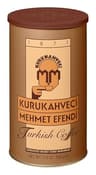
Kurukahveci Mehmet Efendi Turkish Coffee, extra-fine ground (17.6 oz)

Kurukahveci Mehmet Efendi Turkish Coffee, extra-fine ground (17.6 oz)

The Istanbul house brand, ground extra-fine for a cezve — which is the point. Turkish coffee needs a powder finer than espresso, finer than nearly every home grinder can manage, so buying it already ground is not a compromise here, it is the practical answer.

Buy this with the pot
$25.99 · View on Amazon

Price as of November 23, 2026. #ad How we’re funded

4
KARACA Elda 12-Piece Turkish Coffee & Espresso Cup Set (6 x 80 ml)

KARACA Elda 12-Piece Turkish Coffee & Espresso Cup Set (6 x 80 ml)

Six 80 ml cups with saucers, which is the serving size Turkish coffee is actually made in. A standard espresso cup works, but these are the reason the drink looks like an occasion rather than a small dark coffee.

Best way to serve it
$24.99 · View on Amazon

Price as of November 23, 2026. #ad How we’re funded

The picks in full

#1Best overall

DEMMEX Copper Cezve / Ibrik, 3 servings

A hand-made, hand-engraved copper cezve from Turkey with a wooden handle and a matching spoon. Copper is what the traditional pot is made from because it heats fast and evenly, which is the whole trick with a brew you lift off the heat by eye.

Great gift for: The present for someone who has every brewer already: a beautiful object that makes a drink none of their other gear can, and that costs less than a replacement portafilter.

What’s good

  • 1 mm thick copper, handmade and engraved in Turkey per the listing
  • Three servings — the right size for coffee for two with foam
  • Wooden handle and a spoon included, so it is complete out of the box
  • Listed for gas and electric stovetops

Worth knowing

  • Copper is not induction compatible, and the listing claims no induction use
  • Hand wash only in practice — copper and dishwashers do not mix
  • It needs the right coffee: an extra-fine Turkish grind, not espresso grind
  • Skip it for someone who wants a big mug of coffee — this makes small, strong cups
TypeStovetop cezve (ibrik) for Turkish coffee
Capacity3 servings (per listing)
Material1 mm copper, wooden handle (per listing)
StovetopsGas and electric (per listing); not induction

Specs read from the product listing, on October 15, 2026. Prices are pulled live and dated on the button.

#2Best budget

Volarium Hammered Copper Cezve (small)

A hammered copper cezve at the price of a couple of bags of beans. It does the same job as the engraved pots: small, narrow at the neck so the foam has somewhere to build, and fast enough on the heat to be lifted off by eye.

Great gift for: The low-risk way to give someone a whole new brewing method — cheap enough to pair with a bag of extra-fine ground coffee and still come in under most gift budgets.

What’s good

  • The cheapest honest route into the method
  • Hammered copper body, the traditional material
  • Small size suits one or two cups, which is how the drink is served
  • Nothing to charge, nothing to replace, no filters

Worth knowing

  • The listing publishes no capacity figure in ounces, so we do not state one
  • Copper, so no induction and no dishwasher
  • No spoon or cups included, unlike the engraved sets
  • Skip it if they will not grind or buy extra-fine coffee — the pot alone will not make the drink
TypeStovetop cezve (ibrik) for Turkish coffee
MaterialHammered copper (per listing)
SizeSmall (per listing; capacity not published)
Best forOne or two small cups

Specs read from the product listing, on October 15, 2026. Prices are pulled live and dated on the button.

#3Buy this with the pot

Kurukahveci Mehmet Efendi Turkish Coffee, extra-fine ground (17.6 oz)

The Istanbul house brand, ground extra-fine for a cezve — which is the point. Turkish coffee needs a powder finer than espresso, finer than nearly every home grinder can manage, so buying it already ground is not a compromise here, it is the practical answer.

Great gift for: Pair it with a cezve and the gift is complete. On its own it is the thoughtful add-on for anyone who already owns the pot and has been making do with espresso grind.

What’s good

  • Extra-fine grind for cezve and ibrik, stated on the listing — the hard part solved
  • 100% arabica, roasted in Istanbul; the listing dates the roaster to 1871
  • A 17.6 oz tin lasts a long time at 7 g a cup
  • Vegan and gluten free per the listing, if that matters to the recipient

Worth knowing

  • Pre-ground, so it is at its best in the first weeks after opening
  • Medium roast, one profile — this is a traditional style, not a tasting flight
  • Too fine for every other brewer you own: it will choke a pour-over and a moka pot
  • Skip it for someone who grinds whole beans for everything on principle
TypePre-ground for Turkish coffee
GrindExtra fine, for cezve and ibrik (per listing)
RoastMedium, 100% arabica
Size17.6 oz

Specs read from the product listing, on October 15, 2026. Prices are pulled live and dated on the button.

#4Best way to serve it

KARACA Elda 12-Piece Turkish Coffee & Espresso Cup Set (6 x 80 ml)

Six 80 ml cups with saucers, which is the serving size Turkish coffee is actually made in. A standard espresso cup works, but these are the reason the drink looks like an occasion rather than a small dark coffee.

Great gift for: The gift for a host: Turkish coffee is served to guests, so the cups are a bigger part of the present than they would be for any other brewing method. They double as espresso cups.

What’s good

  • Twelve pieces — six cups and six saucers, enough to serve a room
  • 80 ml is the traditional Turkish coffee size, and a normal espresso size too
  • Works for espresso as well, so they get used even when the cezve does not
  • A boxed set of six reads as a proper present with nothing to assemble

Worth knowing

  • The listing does not state the material or whether they are dishwasher safe, so we do not claim either
  • Small cups are easy to break and awkward to replace as a matching set
  • No cezve included — this is the serving half of the gift
  • Skip it for a household that drinks out of one big mug and always will
TypeTurkish coffee / espresso cup set
Pieces12 — six cups, six saucers (per listing)
Capacity80 ml per cup (per listing)
Best forServing Turkish coffee or espresso

Specs read from the product listing, on October 15, 2026. Prices are pulled live and dated on the button.

What a cezve is, and why the shape matters

A cezve (also called an ibrik) is a small, narrow-necked pot with a long handle, made to sit directly on a heat source. Everything about the shape serves the drink. It is small because Turkish coffee is served in cups of around 80 ml rather than mugs. It is narrower at the neck than at the base so that the foam has somewhere to gather and stay as the coffee rises. And it is traditionally copper, which heats quickly and evenly — useful, because the whole method depends on bringing the pot up slowly and catching it before it boils over.

Both pots here are copper. The DEMMEX is listed as 1 mm thick, hand-made and hand-engraved in Turkey, and sized for three servings — which in practice is coffee for two with a decent head of foam. The Volarium is hammered copper and smaller, which suits one or two cups. Neither needs filters, electricity or replacement parts, and that is a real part of the appeal as a gift: there is nothing to maintain and nothing to subscribe to.

The grind problem, and the only easy fix

Turkish coffee is the finest grind in coffee. Espresso, by the National Coffee Association’s description, is ground like table saltfor a 20 to 30 second extraction under pressure. Turkish is finer than that — a powder, closer to flour — because the grounds are never filtered out. They go into the pot with the water, settle in the bottom of the cup, and the fineness is what gives the drink its body.

Most burr grinders, including good ones, simply do not close far enough to produce it, and a blade grinder produces dust and boulders rather than a consistent powder. We are not going to recommend a grinder here and claim it reaches Turkish fineness, because no listing in our registry publishes that claim. The honest answer is the one Istanbul uses: buy it ready-ground. Kurukahveci Mehmet Efendi states the extra-fine cezve grind on the tin, and a 17.6 oz tin lasts a long time at about 7 g a cup.

If the person you are buying for insists on grinding their own, our grind size guide sets out where Turkish sits relative to espresso and filter, and our manual grinder picks are the ones with the finest adjustment — with the caveat above.

How the drink is actually made

UNESCO’s description is the whole method in two sentences: the fine powder, cold water and sugar go into the pot together, and it is brewed slowly on a stove until the foam forms. Three things follow from that, and they are the difference between the drink and a cup of warm mud:

  • Sugar goes in at the start, not at the table. Decide sweet or unsweetened before brewing, because you cannot stir sugar into a cup with a silt bed at the bottom without ruining it.
  • Slowly is not a suggestion. Low heat is what lets the foam build. A rolling boil kills it, and the foam is the point.
  • The last inch is not for drinking. The grounds settle, and everybody who grew up with the drink stops before them.

Our how to make Turkish coffee guide is the step-by-step version, and it is the page to put in the card with the gift. On serving, UNESCO notes the drink is served in small cups, accompanied by a glass of water, mainly in coffee-houses where people meet to converse — which is why the cups are a bigger part of this present than they would be for any other brewer. The Karaca set is twelve pieces, six cups at the traditional 80 ml with saucers, and it doubles as an espresso set when the cezve is in the cupboard.

How we chose these

1. Copper, because the listing says so

Both pots publish copper construction, and the DEMMEX publishes a thickness. We do not claim a material a listing does not state — which is also why there is no third pot on this page.

2. Size is a serving count, not a capacity

Turkish pots are sold by servings, and a serving is an 80 ml cup. A three-serving cezve is the right size for coffee for two. Anything bigger is harder to foam, because the pot sits on the heat longer before it rises.

3. The gift has to be complete

A pot alone leaves the recipient one grinder short of a drink they have never made. That is why the ground coffee is a pick rather than a footnote, and why we would rather sell you a cheaper pot and a tin of coffee than an expensive pot on its own.

4. No authenticity claims we cannot source

We are not going to rank these by heritage. Where this page describes the tradition, it is UNESCO’s own inscription text; where it describes a pot, it is the listing’s own published specification. We own neither pot and have brewed in neither, and there is no score column here for that reason — see how we choose.

Which to buy, by recipient

  • Has every brewer already— the DEMMEX. It makes a drink none of their other gear can, and it costs less than a replacement portafilter.
  • Might love it, might not— the Volarium, plus the tin. The cheapest honest route into the method.
  • Already owns a cezve— the Mehmet Efendi tin on its own. If they have been making do with espresso grind, this is the upgrade they did not know to ask for.
  • Hosts people— the Karaca cups. Turkish coffee is a hospitality drink, and six cups and saucers reads as a proper present.
  • Wants espresso, not this— a cezve does not make espresso and we will not pretend otherwise. Start at best espresso machines instead.
  • Wants strong coffee with no gear — a moka pot is the better buy: same stovetop simplicity, a more familiar cup, and a grind their existing grinder can actually produce.

Finally, the honest limitation of this whole category. Turkish coffee is a different drink, not a different way to make the coffee they already like. It is unfiltered, it is served small, and there are grounds in the bottom of the cup by design. For somebody curious about coffee that is a delight; for somebody who wants a big mug on the way to work it is a mistake, and a travel mug and a bag of decent beans would be the better gift.

Frequently asked questions

What is the best Turkish coffee pot?

The DEMMEX hand-engraved copper cezve for most gifts: copper is the traditional material because it heats fast and evenly, the three-serving size is right for coffee for two, and it ships with a wooden handle and a spoon so nothing else is needed. The Volarium hammered copper cezve is the budget pick and brews the same drink at a fraction of the price.

Do I need special coffee for a Turkish coffee pot?

Yes, and this is the one thing that ruins the gift. UNESCO's description of the method has the beans ground to a fine powder, which is finer than espresso - the NCA describes espresso grind as like table salt, and Turkish is closer to flour. Almost no home grinder reaches it, so buy a tin of coffee that states an extra-fine cezve grind, such as Kurukahveci Mehmet Efendi.

What size cezve should I buy?

Turkish pots are sold by servings, and a serving is a small cup of around 80 ml rather than a mug. A two to three serving pot makes coffee for two people with a proper head of foam and is the easiest size to brew well. Larger pots sit on the heat longer before the coffee rises, which makes the foam harder to catch.

How do you make Turkish coffee in a cezve?

Per UNESCO's own description: the fine coffee powder, cold water and sugar go into the pot together, and it is brewed slowly on the stove to produce the desired foam. Decide on the sugar before you brew, keep the heat low so the foam builds, and stop pouring before the grounds. It is served in small cups with a glass of water alongside, and the last inch of the cup is not for drinking.

Is a Turkish coffee pot worth it?

As a gift, yes - it is one of the cheapest ways to give somebody a brewing method they do not already have, and there is nothing to maintain, nothing to replace and no filters to buy. As an everyday brewer it is narrower: the drink is small, unfiltered and leaves grounds in the cup, so it suits somebody curious about coffee rather than somebody who wants a mug to take to work.

Can you use a Turkish coffee pot on an induction stove?

Only if the pot is induction compatible, and copper usually is not. The two pots here are copper and the DEMMEX listing names gas and electric stovetops. If their kitchen is induction, check the listing before buying, or buy a stovetop brewer that publishes induction compatibility - our moka pot page covers an induction-specific option.

Sources

  • UNESCO — Turkish coffee culture and tradition (Representative List of the Intangible Cultural Heritage of Humanity) — UNESCO's inscription describes the method: “The freshly roasted beans are ground to a fine powder”, then “the ground coffee, cold water and sugar are added to a coffee pot” and “brewed slowly on a stove to produce the desired foam”. On serving: “The beverage is served in small cups, accompanied by a glass of water”, mainly in coffee-houses where people meet to converse, share news and read books (accessed October 15, 2026)
  • National Coffee Association — Espresso — NCA on espresso: high pressure forcing nearly boiling water through a fine grind ("like table salt"), a 1:2 ratio of dry coffee to brewed espresso, 20–30 seconds of contact, crema as "the velvety, golden-brown top layer", and a machine, scale and grinder as the equipment (accessed August 18, 2026)
  • National Coffee Association — Coffee Varieties — NCA on the two commercial species: arabica is "fine, mild, aromatic", grows at roughly 2,000–6,000 feet in steady 59–75°F temperatures and is "lower in caffeine", making up approximately 62% of world production; robusta has "strong, bold flavors with bitter undertones", grows at far lower altitudes in 75–85°F, carries "about 50–60% more caffeine than arabica" and makes up approximately 38% (accessed August 18, 2026)
  • National Coffee Association — Storage and Shelf Life — NCA on coffee's "greatest enemies" — air, moisture, heat and light — plus shelf-life figures: roasted beans 1–3 weeks at room temperature, ground coffee 1–2 weeks, frozen beans 3–4 months (accessed August 11, 2026)

Keep reading