Drip & Dose

CASABREWS 3700 Review: The Cheap Espresso Machine, Honestly

The machine people buy when they want espresso at home and cannot spend Breville money. What it does well, what the pressurized basket costs you, and who should spend elsewhere.

By Stephen V.Last updated How we choose

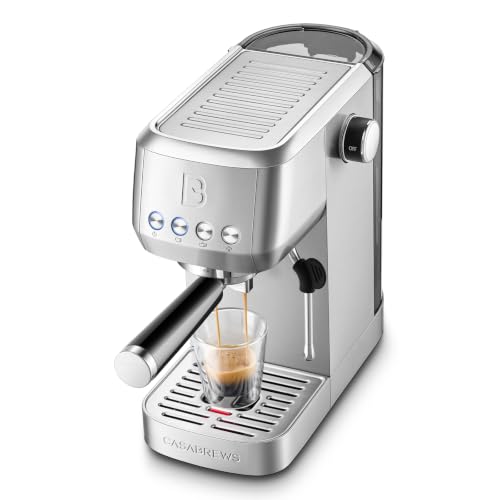
The CASABREWS 3700 is the right machine for one specific gift: somebody who wants to make espresso drinks at home, has never done it, and would not be given a machine at all if the budget had to reach $300. It is a semi-automatic machine with a steam wand and a stainless-look body, and it is one of the cheapest ways into home espresso that still looks like a present. If the budget can reach a Breville Bambino, buy the Bambino instead — that is the honest headline, and the rest of this page is why.

The detail that explains both the appeal and the ceiling is in the specification: this machine uses a pressurized basket. A pressurized (or dual-wall) basket builds pressure behind a small valve rather than relying on the coffee bed to do it. In plain terms, it will produce a thick, crema-topped shot from supermarket pre-ground coffee, which is exactly what a beginner wants. It also means the machine is doing the work the coffee should be doing, so the ceiling is lower: dialing in a good grinder barely changes the cup.

We own no unit and have pulled no shots on it. This review is a read of the published specification against what the National Coffee Association describes espresso as — high pressure forcing nearly boiling water through a fine grind, ground like table salt, over 20 to 30 seconds at roughly a 1:2 ratio — plus an honest comparison against the machines one and two price steps up. The price on every button below is live.

How this is funded: we earn a commission if you buy through our links, at no extra cost to you. It never changes which gift we recommend, and we’ll tell you plainly when to skip one. Full disclosure.

Quick picks

Sorted by who each one suits, with a live price you can act on. Tap a row to jump to the full write-up. We haven’t lab-tested these — here’s exactly what we do instead.

#ProductBest forPrice
1
CASABREWS 3700 Espresso Machine

CASABREWS 3700 Espresso Machine

An ultra-budget all-in-one with a stainless look that punches above its price. It's the machine to gift when the budget is tight but you still want something that feels like a gift, not a compromise.

The machine reviewed here
2
De'Longhi Stilosa (EC260)

De'Longhi Stilosa (EC260)

The cheapest honest way to find out whether home espresso is for someone. Pressurized basket, manual steam wand, no frills — but it makes real shots, not pods.

The closest alternative at a similar price
$149.95 · View on Amazon

Price as of November 23, 2026. #ad How we’re funded

3
Breville Bambino (BES450)

Breville Bambino (BES450)

The most forgiving real espresso machine to learn on: a tiny 54mm ThermoJet unit that heats in about three seconds and pulls genuinely good shots. If you want to gift 'proper espresso at home' without a steep learning curve, this is the one.

Better if the budget can stretch
$299.95 · View on Amazon

Price as of November 23, 2026. #ad How we’re funded

4
Nespresso Vertuo Pop+ (by Breville)

Nespresso Vertuo Pop+ (by Breville)

The cheapest way into the Vertuo system, and the one we'd give first. It brews everything from a 1.35 oz espresso to a 14 oz Alto off a single button, reads a barcode on each capsule to set its own time and volume, and takes up about the space of a large water bottle.

Better if nobody wants to learn
$89.00 · View on Amazon

$129.9532% off

Price as of November 23, 2026. #ad How we’re funded

5
Wacaco Nanopresso Portable Espresso Maker

Wacaco Nanopresso Portable Espresso Maker

A pocket-sized hand pump that makes a surprisingly real shot anywhere — campsite, hotel, office. Cheap, tiny, and one of the most fun coffee gifts you can give.

Cheaper, and no electricity
$63.92 · View on Amazon

$79.9020% off

Price as of November 23, 2026. #ad How we’re funded

The picks in full

#1The machine reviewed here

CASABREWS 3700 Espresso Machine

An ultra-budget all-in-one with a stainless look that punches above its price. It's the machine to gift when the budget is tight but you still want something that feels like a gift, not a compromise.

Great gift for: A crowd-pleaser gift: looks premium, costs little, and gets someone brewing espresso the day it arrives.

What’s good

  • Stainless styling that looks more expensive than it is
  • Includes a frothing wand for lattes and cappuccinos
  • One of the lowest-cost ways into home espresso

Worth knowing

  • Budget internals — it's a starter, not a forever machine
  • Skip it if they're a serious hobbyist — they'll want a Gaggia or Breville
TypeSemi-automatic, pressurized basket
MilkSteam wand included
Skill levelBeginner

Specs read from the product listing, on July 25, 2026. Prices are pulled live and dated on the button.

#2The closest alternative at a similar price

De'Longhi Stilosa (EC260)

The cheapest honest way to find out whether home espresso is for someone. Pressurized basket, manual steam wand, no frills — but it makes real shots, not pods.

Great gift for: A low-risk gift for someone curious about espresso who isn't ready for a bigger commitment.

What’s good

  • Very affordable — a real espresso machine for the price of a few cafe visits
  • Small and simple to use out of the box
  • Pressurized basket is forgiving of a cheap or inconsistent grind

Worth knowing

  • Plastic-heavy build; it won't feel premium
  • Skip it if they're already into coffee — they'll outgrow it fast
TypeManual, pressurized 51mm basket
MilkManual steam wand
Skill levelBeginner

Specs read from the product listing, on July 25, 2026. Prices are pulled live and dated on the button.

#3Better if the budget can stretch

Breville Bambino (BES450)

The most forgiving real espresso machine to learn on: a tiny 54mm ThermoJet unit that heats in about three seconds and pulls genuinely good shots. If you want to gift 'proper espresso at home' without a steep learning curve, this is the one.

Great gift for: Perfect for someone who loves cafe espresso and is ready to make it at home, but would be put off by a fussy, slow machine.

What’s good

  • Heats in ~3 seconds — no waiting around every morning
  • Compact footprint that fits a small kitchen counter
  • Makes espresso good enough to keep them off the pods

Worth knowing

  • They'll want a decent grinder too — budget for one or gift a bag of pre-ground to start
  • Skip it if they only drink drip coffee — this is for espresso and milk drinks
TypeSemi-automatic, 54mm portafilter
Heat-up~3 seconds (ThermoJet)
Skill levelBeginner-friendly

Specs read from the product listing, on July 25, 2026. Prices are pulled live and dated on the button.

#4Better if nobody wants to learn

Nespresso Vertuo Pop+ (by Breville)

The cheapest way into the Vertuo system, and the one we'd give first. It brews everything from a 1.35 oz espresso to a 14 oz Alto off a single button, reads a barcode on each capsule to set its own time and volume, and takes up about the space of a large water bottle.

Great gift for: The gift for someone who wants good coffee with zero decisions — no grinder, no dose, no technique, and a machine small enough that nobody has to rearrange a counter for it.

What’s good

  • Brews five sizes, so it covers both the espresso drinker and the big-mug drinker
  • Roughly 30-second heat-up — genuinely a one-minute coffee
  • Compact enough for a small kitchen, dorm or office at 8.6 x 14 x 10.4 in

Worth knowing

  • Vertuo capsules only — Original capsules will not fit, and neither will supermarket pods
  • Skip it if they already own an Original-line machine and a drawer of Original capsules
Capsule lineVertuo (centrifusion)
Cup sizes5, from 1.35 oz espresso to 14 oz Alto
Footprint8.6 x 14 x 10.4 in

Specs read from the product listing, on August 13, 2026. Prices are pulled live and dated on the button.

#5Cheaper, and no electricity

Wacaco Nanopresso Portable Espresso Maker

A pocket-sized hand pump that makes a surprisingly real shot anywhere — campsite, hotel, office. Cheap, tiny, and one of the most fun coffee gifts you can give.

Great gift for: A hit for campers, travelers and van-lifers — espresso with no outlet required.

What’s good

  • Genuinely portable and rugged
  • Hand-pumped — needs only hot water and ground coffee
  • Affordable, novel, and actually useful

Worth knowing

  • Single small shot at a time — not a household machine
  • Skip it if they want to make drinks for a group
TypeHand-pump portable
PowerNone — manual
Best forTravel, camping, desk

Specs read from the product listing, on September 29, 2026. Prices are pulled live and dated on the button.

What you are actually buying

Three things, and they are the three things a first espresso machine needs:

A pump and a portafilter. This is a real semi-automatic machine, not a capsule system. Coffee goes into a basket, the basket locks into the group, and the pump pushes hot water through it. That matters for running cost more than anything else: they buy coffee by the bag, not by the capsule, and nothing is locked to one brand.

A steam wand.Most people who say they want espresso actually drink lattes and cappuccinos, and the wand is what makes those possible. It is manual — they will have to learn to texture milk, and the first few attempts will be bubbly rather than silky. If that sounds like a chore rather than a hobby, read the alternatives section below before buying.

A body that looks like a gift. This is not a trivial point for a present. The stainless styling reads as more expensive than it is, which is precisely why this machine gets bought as a gift rather than as an appliance.

The pressurized basket, explained properly

This is the single most important thing to understand before buying any sub-$150 espresso machine, and almost nobody explains it.

In a commercial-style machine, resistance comes from the coffee: a fine, evenly distributed, tamped bed of grounds is what makes the pump work against something and produces crema. Get the grind wrong and the shot gushes or chokes. A pressurized basket adds a valve behind the coffee, so the machine creates that resistance itself.

The consequences, both ways:

  • Good: it works on day one, with any coffee, including pre-ground supermarket espresso. For a beginner that is the difference between a machine they use and a machine they resent. You do not need to buy a grinder the same week.
  • Bad: the ceiling is low. Because the valve is making the pressure, a better grinder, a precise dose or a careful tamp change the cup far less than they would on a machine with a standard basket. Somebody who gets into this as a hobby will outgrow it, and the upgrade path is to buy a different machine rather than better accessories.

That is the whole trade. If you are buying for a curious beginner, the trade is in your favor. If you are buying for somebody who already talks about grind size, it is not, and our best espresso machines page starts where this machine stops.

Who should buy it

  • A first espresso machine on a real budget. The alternative is usually no machine at all, and a working machine beats a wish list.
  • A latte drinker who wants to stop paying cafe prices. A wand plus a bag of beans covers that, and the economics are obvious within a month.
  • A student, a first apartment, an office kitchen. Cheap enough that it is not a disaster if it ends up unused, and small enough to live on a crowded counter.
  • A gift that has to look like something. Honestly, this is half of why it sells, and there is nothing wrong with that.

Who should buy something else

If the budget reaches the Bambino, buy the Bambino

Breville publishes the Bambino’s ThermoJet system reaching optimum extraction temperature in 3 seconds, a 15 bar Italian pump running low-pressure pre-infusion followed by 9 bar extraction, PID temperature control and a 54 mm portafilter built around an 18 g dose. Those are the specifications of a machine that rewards a better grinder instead of flattening it. Our Bambino review is the long version, and machines under $300 is the band it sits in.

If they want a known brand at this price, look at the Stilosa

The De’Longhi Stilosa is the obvious cross-shop: same rough price, same manual steam wand, same beginner audience, from a brand with a service network and a reputation. We do not claim one is better in the cup — we have tested neither — but if brand confidence matters to the recipient, it is the safer box to hand over.

If nobody in the house wants to learn, buy capsules

A manual steam wand and a portafilter are both small skills, and some households genuinely do not want either. A Nespresso Vertuo Pop+ makes a consistent little coffee with nothing to clean — Nespresso publishes that each Vertuo capsule carries a unique barcode the machine reads to set its extraction — and there is no shame in that being the right appliance. We argue it out on Nespresso vs an espresso machine.

If there is no counter space or no outlet, go hand-powered

The Wacaco Nanopresso is cheaper than this machine and genuinely portable: Wacaco publishes a pumping system reaching up to 18 bars (261 PSI) of pressure with just the strength of your hands, and states plainly that the Nanopresso does not heat water, so hot water has to come from somewhere else. It makes one small, strong drink at a time and stores in a drawer.

What it needs that is not in the box

Two things, and the first one is optional in a way it would not be on a better machine.

Coffee.Because of the pressurized basket, pre-ground espresso works here, which is the point. If you want to improve the cup anyway, a bag of real espresso beans and the cheapest capable hand grinder is the upgrade path — see best espresso beans and espresso grinders under $100. Just know that the improvement on this machine is smaller than it would be on a Bambino or a Gaggia.

Something to steam milk in. A cheap stainless pitcher makes the wand usable and a mug does not. Ours are on best espresso accessories, and a standalone milk frother is a reasonable alternative for anybody who finds the wand frustrating.

The verdict

Buy it as a first machine, as a gift, for somebody who drinks milk drinks and has never owned an espresso machine. It will make them a cappuccino the week it arrives, it costs a fraction of the machines it resembles, and the running cost is a bag of coffee rather than a box of capsules.

Do not buy it as a machine to grow into. The pressurized basket that makes it forgiving is the same thing that caps it, and the honest upgrade from here is a new machine rather than a new grinder. If you can see that coming — if the recipient is the sort of person who reads about coffee — spend the extra on a Bambino now and skip a step.

And the no-fabrication note that belongs on every page like this: we own no CASABREWS unit, we have pulled no shots, and there is no score on this page. The specification above is the listing’s own, read on a dated visit and recorded in our product registry; the espresso fundamentals are the NCA’s; the comparison figures are Breville’s, De’Longhi’s, Nespresso’s and Wacaco’s own. How we work is on how we choose.
Frequently asked questions

Is the CASABREWS 3700 a good espresso machine?

It is a good first espresso machine and a poor long-term one. It is a real semi-automatic machine with a portafilter and a steam wand at a fraction of the price of a Breville, so it makes cappuccinos the week it arrives and buys coffee by the bag rather than by the capsule. Its pressurized basket means a better grinder will not improve the cup much, so a serious hobbyist will outgrow it.

What is a pressurized basket, and does it matter?

It is a basket with a valve behind the coffee, so the machine creates the brewing resistance instead of the coffee bed doing it. It matters in both directions: it makes a thick, crema-topped shot possible with ordinary pre-ground coffee, which is ideal for a beginner, and it flattens the difference a good grinder, dose or tamp would make, which caps how good the coffee can get.

Do I need a grinder for the CASABREWS 3700?

Not immediately, which is unusual. Because of the pressurized basket, pre-ground espresso coffee works on this machine, where it would fail on a machine with a standard basket. Buying beans and a hand grinder will still make the coffee taste fresher, but the improvement is smaller here than it would be on a Bambino or a Gaggia Classic.

CASABREWS 3700 vs De'Longhi Stilosa: which should I buy?

They are the same kind of purchase: a similarly priced beginner machine with a manual steam wand. We have tested neither and will not claim one pulls a better shot. Choose the Stilosa if brand familiarity and a service network matter to the recipient, and the CASABREWS if the stainless look and the gift presentation matter more.

Can the CASABREWS 3700 make lattes and cappuccinos?

Yes - it includes a steam wand, which is what makes milk drinks possible. The wand is manual, so texturing milk is a skill the owner has to pick up, and the first attempts are usually bubbly rather than silky. A cheap stainless milk pitcher makes a real difference; a mug does not. If nobody wants to learn, an automatic frother or a machine with automatic milk texturing is the better buy.

Should I spend more than this on a first espresso machine?

If you can reach the Breville Bambino, yes. Breville publishes extraction temperature in three seconds, PID temperature control and 9 bar extraction after low-pressure pre-infusion - a machine that gets better as the owner gets better. If you cannot reach that, the CASABREWS is a far better outcome than no machine, and it costs little enough that outgrowing it is not an expensive mistake.

Sources

  • National Coffee Association — Espresso — NCA on espresso: high pressure forcing nearly boiling water through a fine grind ("like table salt"), a 1:2 ratio of dry coffee to brewed espresso, 20–30 seconds of contact, crema as "the velvety, golden-brown top layer", and a machine, scale and grinder as the equipment (accessed August 18, 2026)
  • Breville (US) — the Bambino (BES450) — Breville: the "ThermoJet® heating system achieves the optimum extraction temperature in 3 seconds"; "Low pressure pre-infusion followed by 9 bar extraction" from a "15 bar Italian pump"; a 54mm portafilter with "the ideal dose of 18g"; "Manual milk texturing"; "PID Temperature Control"; weight "10.42 lbs"; dimensions listed as "11.9 x 6.1 x 13.5 in"; and "see the Bambino® Plus if you prefer the features of the Bambino but would like the inclusion of an automatic steam wand" (accessed September 18, 2026)
  • Nespresso — Vertuo Coffee Pods — Nespresso's own capsule range page: "Vertuo pods are compatible only with Nespresso Vertuo coffee machines"; "The Vertuo design includes a unique barcode that your machine reads to set the ideal extraction for that blend"; and six Vertuo cup sizes, from a 40 ml espresso to a 535 ml carafe (accessed September 10, 2026)
  • Wacaco — Nanopresso — Wacaco's own Nanopresso page: a “newly patented pumping system, enabling it to reach up to 18 bars (261 PSI) of pressure with just the strength of your hands”; it “works best with finely ground coffee that is slightly tamped and requires 15% less force to pump compared to previous models (1st generation Minipresso)”; the portafilter “components … are easily separated for deep cleaning”; and the notice “The Nanopresso does not heat water. Be sure to fill it with hot water before brewing your espresso” (accessed October 15, 2026)

Keep reading