How we picked, in the order the criteria matter
Books have no spec sheet and we are not scoring prose, so the criteria are all about fit — which is the only thing that decides whether a gifted book gets read or shelved unopened.
1. Does it match what they do with coffee, not how much they like it?
This is the criterion that sorts the whole page. Someone who has just been given a French press wants a short practical book about French presses. Someone who has been brewing carefully for six years wants a book about tasting, or a book about where coffee comes from, because they already know the practical part. Enthusiasm is not the variable; stage is.
2. Current edition over famous title
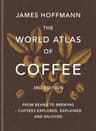
Coffee writing dates faster than most food writing, because the equipment and the trade both move. Where a book has been revised we have linked the current revision — the atlas pick is its third edition — rather than the cheaper old printing that will arrive looking like a remainder.
3. Does it look like a present?
We are a gift site, so this counts. A large illustrated hardback reads as a gift on its own. A paperback handbook does not, however useful it is — which is why three of the picks below are explicitly framed as the thing you add to a brewer, a bag of beans or a mug rather than hand over alone.
4. No overlap inside the set
Two of these books are by James Hoffmann and two are by Jessica Easto, and that is not laziness — it is what the shelf looks like. But the pairs do different jobs, and where two picks genuinely overlap we have said so on the card: the Hoffmann home handbook and the Easto manual cover similar ground, so buy one of the two, not both.
5. Honest cons, which for a book means honest fit
Every card below carries the reader it is wrong for. A reference atlas is the wrong gift for somebody who wants better coffee tomorrow morning. A history is the wrong gift for somebody who wanted a gadget. Saying so is more useful than six paragraphs of praise.
Which book for which person
- You know they like coffee and nothing else about them. The atlas. It is the only pick here that works at every level of knowledge, and the only one that looks like a proper present by itself.
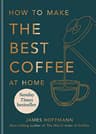
- You are also giving them a brewer or a grinder. The Hoffmann home handbook, taped to the box. It is the cheapest way to make the gear gift succeed, because the most common reason a brewer ends up in a cupboard is that nobody explained the first three mornings.
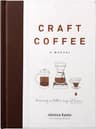
- They already weigh their coffee. The Easto manual, for the variables, or the tasting book if they have been weighing it for years.
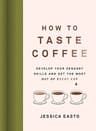
- They have everything. The tasting guide. Equipment is the one thing you cannot add to; the skill is.
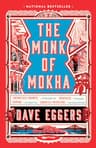
- They read novels, not manuals. The Monk of Mokha. It is narrative non-fiction and it is the cheapest pick on the page.
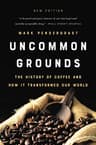
- They are the person at dinner who asks how things got this way. The history. Trade, labor, economics, and how the brands in the cupboard came to be there.
- They drink pods or instant and are happy. Honestly, none of these. Buy better pods or good instant— a brewing book for somebody with no brewer is a present that asks them to change.
How to make a book a real gift
A book handed over on its own can land as an afterthought, and the fix costs almost nothing. Three pairings that work:
- A book plus the beans it talks about. The tasting guide plus a single-origin bag turns reading into an exercise. Our coffee gift sets page has samplers built for exactly this.
- A book plus the cheapest piece of gear it assumes. Every brewing book in this list assumes a scale, and most people buying their first brewer do not own one. A brew scale plus a handbook is a complete upgrade for well under $60.
- A book plus the brewer, as one present. A pour-over dripper or a French press with the handbook on top is the highest-value coffee gift on this site at the price, and it is the combination least likely to be abandoned.
What a coffee book cannot do
It cannot replace a grinder. This is worth saying plainly, because every book in this list eventually arrives at the same conclusion: the single largest jump in home coffee quality comes from grinding beans immediately before brewing, which is also the National Coffee Association’s own advice — buy whole beans in small amounts, grind only what you are about to use, because coffee begins to lose aromatics the moment it is ground. A book will explain why their coffee tastes flat. It will not fix it.
So if the choice is between a $15 book and a $120 grinder for somebody still brewing pre-ground coffee, buy the grinder — see our grinder roundup and burr vs blade. The book is the right gift when the gear is already there, or as the thing that makes new gear make sense.
A note on editions, formats and used copies
Three practical warnings for anyone buying a book as a present rather than for themselves:
- Check the edition. Popular coffee titles have multiple printings at different prices, and the cheapest listing is often an older revision. The picks above point at the current editions as listed on the build date.
- Buy the physical book, not the e-book. A gift needs to be handed over, and an illustrated reference book is close to unusable on a phone.
- Avoid used copies for a gift. They are excellent value and a poor present. If budget is the constraint, the narrative pick new costs less than most used hardbacks.