The sludge problem, and what actually fixes it
The single most common complaint about French press coffee is the silt at the bottom of the mug. It happens because a plunger screen is a mesh, not a filter: it stops the grounds and lets the fines through. Three things reduce it, in order of how much they help.
- A coarser, more even grind. This is the biggest lever, and it is why a burr grinder matters more here than most people expect. Blade grinders produce a lot of dust, and dust is exactly what ends up in the cup. See our grind size guide.
- A double micro-filter. An ESPRO-style basket seals against the glass and filters twice, which removes most of what a single mesh misses. It also stops the brew when you press, so the last cup is not stewed.
- Not pouring the last inch. Free, and what most people already do.
Glass or steel?
Glass presses are cheaper, you can watch the brew, and the classic Chambord shape is genuinely nice to own. They also lose heat quickly — a full eight-cup glass press is noticeably cooler by the second mug — and the carafe is a breakable part with a replacement cost.
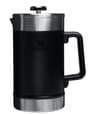
Double-walled steel solves both problems and costs two to four times as much. For a daily press drinker, or for anyone taking coffee outdoors, that is money well spent. For someone who makes press coffee at the weekend, the glass classic is the better gift and the better-looking object.
Sizing it properly
French press capacities are quoted in tiny European “cups” of about 4 oz, which makes an 8-cup press sound enormous and hold about 34 oz — roughly three normal mugs. For one person, a 3-cup or 17 oz press is right and brews a stronger, hotter cup because it isn’t half empty. For two people or for guests, go to 32–34 oz. A 48 oz press is a group or camping proposition.
How to make press coffee well, in four lines
Coarse grind, roughly like sea salt. Roughly 1 gram of coffee to 15 grams of water — about 30 g of coffee for a 450 ml two-mug brew. Water just off the boil. Four minutes, then press slowly and pour the whole thing out, because coffee left sitting on the grounds keeps extracting and turns bitter. A brew scale makes that ratio repeatable, which is the difference between good press coffee and occasionally good press coffee.
If a cleaner, lighter cup is more their thing, the paper filter of a pour-over gets there instead — and best coffee makers to gift compares every style side by side.