Drip & Dose

The Best Coffee Makers for an Office

Every other list sizes an office machine by cup count. That is the wrong question. Six picks sorted by the one that actually decides it: who is going to maintain the thing once the novelty wears off.

By Stephen V.Last updated How we choose
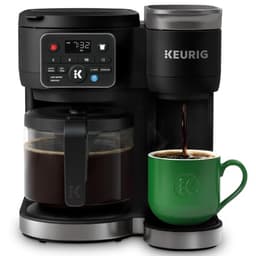
Keurig K-Duo Hot & Iced Single Serve & Carafe (Gen 2)

Our top pick — Best overall

Keurig K-Duo Hot & Iced Single Serve & Carafe (Gen 2)

$129.99 · View on Amazon

$219.9941% off

Price as of October 15, 2026. #ad How we’re funded

For most offices the right machine is the Keurig K-Duo (Gen 2), because it is the only pick here that refuses to settle the pods-versus-pot argument. A K-Cup on one side for the person who wants one cup at 7am, a carafe of ordinary ground coffee on the other for the 9am meeting, both fed from the 72 oz single reservoir Keurig publishes. Nobody has to standardize, and nobody is left brewing a full pot for one cup. Its honest weakness is the glass carafe on a hot plate — if your office is the kind where a pot sits there until lunchtime, read the thermal section before you buy.

Office coffee is a maintenance problem wearing a hardware problem’s clothes. The machine almost never fails because it was too small; it fails because nobody owns it. The filters run out and nobody buys more. Someone leaves a third of a pot on the hot plate until 2pm. The grounds basket sits full for two days. Six months later there is a perfectly good brewer on the counter with a limescale ring in it and everyone walks past it to the shop on the corner.

So the question that should sort this category is not how many cups it makes. It is: what does this machine need from a human being, and is any human being going to do it? A machine that needs nothing survives a shared kitchen. A machine that needs a weekly wipe survives only if one person has volunteered. That single distinction is why a pod machine beats a better brewer in most offices, and it is the honest reason this page starts where it does.

Six picks below, from a pod-and-carafe hybrid for a shared breakroom down to a brewer that lives in a desk drawer for a private office. Each one lists what it asks of whoever looks after it, who it suits, and the honest reason to skip it. Prices are pulled live and dated on each button, so the brackets in the prose stay qualitative. There is also a section near the end on the running cost of pods, because that is the part that surprises whoever signs off the expense claim.

How this is funded: we earn a commission if you buy through our links, at no extra cost to you. It never changes which gift we recommend, and we’ll tell you plainly when to skip one. Full disclosure.

Quick picks

Sorted by who each one suits, with a live price you can act on. Tap a row to jump to the full write-up. We haven’t lab-tested these — here’s exactly what we do instead.

#ProductBest forPrice
1
Keurig K-Duo Hot & Iced Single Serve & Carafe (Gen 2)

Keurig K-Duo Hot & Iced Single Serve & Carafe (Gen 2)

The only machine most shared kitchens actually need: a K-Cup on one side for the person who wants one cup at 7am, a glass carafe on the other for the 9am meeting, both fed from one 72 oz reservoir Keurig publishes. It settles the pod-or-pot argument by refusing to pick.

Best overall
$129.99 · View on Amazon

$219.9941% off

Price as of October 15, 2026. #ad How we’re funded

2
Keurig K-Elite Single Serve K-Cup Pod Coffee Maker

Keurig K-Elite Single Serve K-Cup Pod Coffee Maker

The single-serve Keurig worth buying for a room full of people: Keurig publishes five cup sizes, a 75 oz reservoir, an iced beverage setting and a sub-one-minute brew. The big tank is the whole point — it is the difference between refilling once a day and refilling after every third person.

Best single-serve
$99.99 · View on Amazon

$209.9952% off

Price as of October 15, 2026. #ad How we’re funded

3
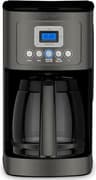
Cuisinart PerfecTemp 14-Cup Programmable (DCC-3200)

Cuisinart PerfecTemp 14-Cup Programmable (DCC-3200)

The default big-batch programmable machine: fourteen cups, a brew-strength control, a 1-4 cup setting and a timer, at a price that leaves budget for good beans.

Best for a crowd
$76.49 · View on Amazon

$119.9536% off

Price as of October 15, 2026. #ad How we’re funded

4
Bonavita 8-Cup Drip Coffee Maker (BV1901TS)

Bonavita 8-Cup Drip Coffee Maker (BV1901TS)

A one-button brewer with a stainless thermal carafe, so the pot stays hot without a hotplate slowly stewing it. Bonavita lists it as SCA certified. No timer, no menu, no screen — just a switch.

Best for coffee that stays drinkable
$189.95 · View on Amazon

Price as of October 15, 2026. #ad How we’re funded

5
Nespresso Vertuo Pop+ (by Breville)

Nespresso Vertuo Pop+ (by Breville)

The cheapest way into the Vertuo system, and the one we'd give first. It brews everything from a 1.35 oz espresso to a 14 oz Alto off a single button, reads a barcode on each capsule to set its own time and volume, and takes up about the space of a large water bottle.

Best for a private office
$129.95 · View on Amazon

Price as of October 15, 2026. #ad How we’re funded

6
AeroPress Go Portable Coffee Maker Kit

AeroPress Go Portable Coffee Maker Kit

The Original shrunk down and packed inside its own mug, so the whole brewing kit is one object the size of a travel cup. Same brew method, same cleanup, designed to live in a bag.

Best for a desk with no counter
$49.95 · View on Amazon

Price as of October 15, 2026. #ad How we’re funded

The picks in full

#1Best overall

Keurig K-Duo Hot & Iced Single Serve & Carafe (Gen 2)

The only machine most shared kitchens actually need: a K-Cup on one side for the person who wants one cup at 7am, a glass carafe on the other for the 9am meeting, both fed from one 72 oz reservoir Keurig publishes. It settles the pod-or-pot argument by refusing to pick.

Great gift for: For an office, a vacation rental or any kitchen where people disagree about pods — nobody has to compromise, and nobody is left brewing a whole pot for one cup.

What’s good

  • Pods and ground coffee in one machine, so no household or office has to standardize
  • One shared 72 oz reservoir per Keurig, which is far fewer refill trips than a pod-only machine
  • Keurig publishes MultiStream Technology, a Strong Brew setting and an iced beverage setting
  • The carafe side takes ordinary ground coffee, so the running cost is not locked to pods

Worth knowing

  • A glass carafe on a hot plate, which keeps cooking the coffee — the fourth cup tastes it
  • Keurig does not publish the carafe capacity or the brew sizes in ounces on this model's page, so do not promise a cup count
  • Two brewing paths means two things to descale and two baskets to keep clean
  • Skip it for one person who only ever drinks pods — a single-serve machine is smaller and cheaper
TypeK-Cup pod + ground-coffee carafe
Reservoir72 oz, shared by both sides (per Keurig)
BrewingMultiStream Technology (per Keurig)
SettingsStrong Brew, iced beverage (per Keurig)

Specs read from the product listing, on October 8, 2026. Prices are pulled live and dated on the button.

#2Best single-serve

Keurig K-Elite Single Serve K-Cup Pod Coffee Maker

The single-serve Keurig worth buying for a room full of people: Keurig publishes five cup sizes, a 75 oz reservoir, an iced beverage setting and a sub-one-minute brew. The big tank is the whole point — it is the difference between refilling once a day and refilling after every third person.

Great gift for: For the person who hates waiting and the office that hates washing up — one cup, one minute, nothing to clean but the pod.

What’s good

  • 75 oz reservoir per Keurig, so a shared kitchen is not constantly refilling it
  • Five cup sizes published by Keurig, which covers an espresso-ish mug and a travel mug
  • Iced beverage setting, so it brews hot over ice instead of making weak cold coffee
  • Nothing to clean between users — no pot, no grounds, no shared carafe

Worth knowing

  • Pods cost multiples of ground coffee per cup, and Keurig itself says pods are “Not recycled in many communities”
  • Keurig publishes a cup COUNT, not ounces, and the Amazon listing title states a different range — treat any specific ounce figure as unverified
  • One cup at a time: brewing for six people means standing there for six minutes
  • Skip it for anyone who buys whole beans — a pod machine cannot use them
TypeSingle-serve K-Cup pod machine
Cup sizes5 (count per Keurig; ounces not published)
Reservoir75 oz, removable (per Keurig)
Brew timeUnder 1 minute (per Keurig)
Dimensions13.1" H x 9.9" W x 12.7" D (per Keurig)

Specs read from the product listing, on October 8, 2026. Prices are pulled live and dated on the button.

#3Best for a crowd

Cuisinart PerfecTemp 14-Cup Programmable (DCC-3200)

The default big-batch programmable machine: fourteen cups, a brew-strength control, a 1-4 cup setting and a timer, at a price that leaves budget for good beans.

Great gift for: For a family kitchen, a shared house or anyone who makes a full pot rather than a single cup.

What’s good

  • Fourteen cups and a programmable timer at a modest price
  • Brew-strength control and a 1-4 cup mode for small batches
  • Very widely serviced — carafes and filters are easy to replace

Worth knowing

  • Hotplate will stew the last of the pot if it sits for an hour
  • Skip it if they want specialty-grade brewing — this is convenience first, precision second
TypeProgrammable drip / filter
Capacity14 cups
ControlsBrew strength, 1-4 cup mode, 24-hour timer

Specs read from the product listing, on August 11, 2026. Prices are pulled live and dated on the button.

#4Best for coffee that stays drinkable

Bonavita 8-Cup Drip Coffee Maker (BV1901TS)

A one-button brewer with a stainless thermal carafe, so the pot stays hot without a hotplate slowly stewing it. Bonavita lists it as SCA certified. No timer, no menu, no screen — just a switch.

Great gift for: For someone who wants better coffee and actively does not want another gadget with a menu.

What’s good

  • Thermal carafe keeps coffee hot without cooking it on a hotplate
  • One switch — nothing to program or learn
  • Listed as SCA certified, which most drip machines are not

Worth knowing

  • No timer, so it cannot brew before they wake up
  • Skip it if they want a machine that does cold brew and iced modes too
TypeOne-touch drip / filter
Capacity8 cups
CarafeDouble-wall stainless thermal

Specs read from the product listing, on August 11, 2026. Prices are pulled live and dated on the button.

#5Best for a private office

Nespresso Vertuo Pop+ (by Breville)

The cheapest way into the Vertuo system, and the one we'd give first. It brews everything from a 1.35 oz espresso to a 14 oz Alto off a single button, reads a barcode on each capsule to set its own time and volume, and takes up about the space of a large water bottle.

Great gift for: The gift for someone who wants good coffee with zero decisions — no grinder, no dose, no technique, and a machine small enough that nobody has to rearrange a counter for it.

What’s good

  • Brews five sizes, so it covers both the espresso drinker and the big-mug drinker
  • Roughly 30-second heat-up — genuinely a one-minute coffee
  • Compact enough for a small kitchen, dorm or office at 8.6 x 14 x 10.4 in

Worth knowing

  • Vertuo capsules only — Original capsules will not fit, and neither will supermarket pods
  • Skip it if they already own an Original-line machine and a drawer of Original capsules
Capsule lineVertuo (centrifusion)
Cup sizes5, from 1.35 oz espresso to 14 oz Alto
Footprint8.6 x 14 x 10.4 in

Specs read from the product listing, on August 13, 2026. Prices are pulled live and dated on the button.

#6Best for a desk with no counter

AeroPress Go Portable Coffee Maker Kit

The Original shrunk down and packed inside its own mug, so the whole brewing kit is one object the size of a travel cup. Same brew method, same cleanup, designed to live in a bag.

Great gift for: For the commuter, camper or frequent flyer who would rather brew in a hotel room than drink whatever is in the lobby.

What’s good

  • Everything nests inside the included mug — one thing to pack, not five
  • Same two-minute brew and one-push cleanup as the Original
  • Survives being thrown in a backpack

Worth knowing

  • Smaller brew capacity than the Original
  • Skip it if it will only ever sit on a kitchen counter — the Original is cheaper and slightly bigger
TypeImmersion + pressure, paper filter
Packs intoIts own travel mug and lid
Best forTravel, camping, the office

Specs read from the product listing, on August 29, 2026. Prices are pulled live and dated on the button.

Who maintains it? Answer this before you look at a single machine

Every brewer on this page needs something. The difference is how much, how often, and whether it can be skipped without anyone noticing until the coffee tastes wrong. Ranked from least to most demanding:

  • A pod machine needs the reservoir filled and the pod bin emptied. That is it. There are no grounds, no filters to buy, no carafe to wash, and nothing to argue about. It is the only category where the maintenance burden is low enough that it genuinely does get done in a shared kitchen — and that, not cup quality, is why pods dominate offices.
  • A drip machine needs filters, a washed carafe and a descale. Filters are the thing that quietly runs out. The National Coffee Association’s drip guidance is to descale “at least every 3-6 months” to clear mineral buildup from tap water, and in an office nobody has ever done this on schedule. Buy a machine with a permanent gold-tone filter if you can, so one of the three consumables disappears.
  • A manual brewer needs the person using it to clean up after themselves. Which works perfectly for one person at a desk and fails instantly for a shared kitchen, because the one who leaves it dirty is never the one who finds it dirty.

If your honest answer to “who maintains it” is “nobody” — which is the truthful answer in most offices — buy a pod machine and stop reading. If one person has genuinely volunteered, a drip machine makes much better coffee for much less money per cup, and the rest of this page is worth your time.

The four specs that matter in a shared kitchen

Once maintenance is settled, these are the four things that separate a machine people still use in a year from a counter ornament.

  • Reservoir size, not cup size. This is the office-specific spec, and it is the one every consumer review ignores because at home you fill it yourself. A pod machine with a small tank needs refilling after every few cups, and in a shared kitchen the refilling is what nobody does. Keurig publishes 75 oz for the K-Elite and a 72 oz single reservoir on the K-Duo — those are the numbers that make a pod machine survive an office rather than a studio flat.
  • Thermal carafe or a hot plate. A hot plate keeps coffee hot by continuing to cook it. In a home that costs you the fourth cup; in an office, where a pot genuinely does sit from 8am to lunchtime, it is the single biggest reason shared coffee tastes bad. A thermal carafe costs more and fixes it outright.
  • A permanent filter, or paper ones somebody has to buy. Paper filters are cheap and they are also the consumable that runs out at 7:45am on a Monday. A gold-tone permanent filter removes that failure mode entirely, at the cost of a slightly heavier cup — the NCA notes paper, metal and cloth filters each change what reaches the cup.
  • Footprint against the actual counter. Measure it, including the clearance above, because office kitchens have cabinets at awkward heights and a machine that does not fit gets moved to the floor and then to a cupboard. Keurig publishes the K-Elite at 13.1 inches tall, 9.9 wide and 12.7 deep. The Nespresso Vertuo Pop+ is 8.6 x 14 x 10.4 inches, which is roughly a large water bottle.

Which pick suits which office

A shortcut if you do not want to read six write-ups:

  • A normal shared breakroom, mixed habits: the Keurig K-Duo (Gen 2). Pods and a carafe in one machine, so the single-cup people and the pot people both get what they want.
  • A busy kitchen where nobody will wash anything: the Keurig K-Elite. Five cup sizes and a 75 oz reservoir per Keurig, an iced setting so summer is covered, and nothing to clean but the pod bin.
  • A real crowd who drink a pot at a time: the Cuisinart DCC-3200. Fourteen cups, a brew-strength control, a 1-4 cup mode and a 24-hour timer, at a price that leaves budget for decent beans. Hot plate, so see the point above.
  • An office that actually cares how the coffee tastes: the Bonavita 8-cup. Bonavita lists it as SCA certified, which most drip machines are not — the Specialty Coffee Association says certified brewers “meet SCA’s rigorous standards for brewing quality, consistency, and performance” and are tested at a third-party facility — and the stainless thermal carafe means the pot is still drinkable an hour later. One switch, no menu.
  • A private office or a two-person studio: the Nespresso Vertuo Pop+. Five sizes from a 1.35 oz espresso to a 14 oz Alto off one button, roughly a 30-second heat-up, and small enough that nobody has to rearrange the room.
  • A desk, a kettle and no counter space at all: the AeroPress Go. The whole kit packs into its own mug and lives in a drawer. It needs a hot water source and the person using it to rinse it — both of which are fine when the person using it is the only person using it.

The running cost nobody budgets for

This is the part that causes the argument three months in, so it is worth doing the arithmetic honestly before you buy rather than after.

A pod is a pre-measured single serving sold in a small plastic cup. Ground coffee is sold by the pound. Those are different pricing models, and the gap per cup is not marginal — it is usually a multiple, often a large one. Scale that by a twenty-person office drinking two cups a day, five days a week, and pods become a line item somebody notices.

We are not going to invent a number for you here, because the only figures that matter are the ones on the listings you are actually buying from and they move constantly. Do it in four steps with live prices:

  • One: divide the price of a pod box by the number of pods to get cost per pod.
  • Two: divide the price of a bag of coffee by the number of cups in it. The NCA’s Golden Ratio is one to two tablespoons of ground coffee per 6 oz of water, which is roughly 10 to 12 grams a cup, so a 12 oz bag is somewhere around 28 to 34 cups.
  • Three: multiply each by cups per day times working days per year.
  • Four: compare the annual gap to the price difference between the machines. If the gap pays for a better drip machine in under a year — and in a busy office it usually does several times over — the only thing still arguing for pods is the maintenance question at the top of this page.

Which is a real argument, not a weak one. An office that buys the cheaper-per-cup machine and then stops maintaining it ends up buying coffee from the shop on the corner, which costs more than either. Pods are frequently the right answer for reasons that have nothing to do with the price of a pod.

One more honest line on pods, because an office generates a lot of them: Keurig states that “Since 2020, all Keurig K-Cup Pods have been recyclable” and that they are made from recyclable polypropylene, but also that they are “Not recycled in many communities; check locally to see if K-Cup Pods are accepted in your community”. The published steps are to peel and bin the lid, compost or bin the grounds, then check locally for the cup. In an office that means someone has to actually set that up, or the honest expectation is landfill. Our pod coffee gift guide covers the capsule formats in more detail.

What to buy with it

A machine alone is half an office coffee setup, and the other half is cheap.

Beans or pods, obviously, and a medium roast if you are choosing for a group. A medium roast is the least likely to be wrong for a taste you do not know, which in an office is every taste. Best coffee for beginners and light vs dark roastcover that choice. Buy ground, not whole bean, unless a grinder is part of the plan — an office is the one place where whole beans reliably sit unused.

An airtight canister for the open bag. The NCA lists air, moisture, heat and light as coffee’s greatest enemies, and puts ground coffee at one to two weeks of freshness at room temperature. An office bag that sits open on a shelf for a month is the reason shared coffee tastes flat even when the machine is fine. See best coffee canisters.

Descaling solution, bought at the same time as the machine. Not later, because later never happens. The NCA’s recommendation is at least every three to six months, and how to descale a coffee maker is the walkthrough. Put it in the cupboard next to the machine where the next person will find it.

Mugs, which sounds trivial and is not. An office with no mugs has a dishwasher problem, and an office with a mug warmer on each desk has a cold-coffee problem solved — mug warmers are one of the better small gifts for a team, and corporate coffee gifts covers buying for a whole group at once.

Last thing, and it is the mistake we see most: do not buy an espresso machine for an office. A real espresso machine needs grinding, dosing, tamping and milk texturing, every one of which is a skill, and a shared kitchen is the worst possible place to learn one. If the office wants espresso drinks, buy a capsule machine — Nespresso vs an espresso machine explains why that is the right call even when money is not the constraint, and Keurig vs Nespresso settles which capsule system to standardize on.

A short-term rental is a different problem

If you are buying for an Airbnb rather than an office, the axis changes. An office machine fails because nobody maintains it, and you are at least there to notice. A rental machine fails because a guest cannot work out how to use it at 7am and you are not there at all — which puts a much heavier premium on one-button operation and on nothing being able to run out. Best coffee makers for an Airbnb works through that version, including why paper filters are the classic rental failure.
Frequently asked questions

What is the best coffee maker for an office?

The Keurig K-Duo (Gen 2) for most offices, because it brews a K-Cup on one side and a carafe of ordinary ground coffee on the other from one 72 oz reservoir that Keurig publishes, so single-cup drinkers and pot drinkers do not have to agree. For a busy kitchen where nobody will wash anything, the Keurig K-Elite, which Keurig publishes with five cup sizes and a 75 oz reservoir. For an office that genuinely cares how the coffee tastes and has someone willing to maintain it, the Bonavita 8-cup, which Bonavita lists as SCA certified and which uses a thermal carafe instead of a hot plate.

Are pod machines or drip machines better for an office?

Pods win on maintenance, drip wins on cost per cup, and maintenance is usually the deciding factor. A pod machine needs the reservoir filled and the pod bin emptied, with no filters to buy, no grounds and no carafe to wash — which is a low enough burden that it actually gets done in a shared kitchen. A drip machine needs filters, a washed carafe and a descale at least every three to six months per the National Coffee Association, and in most offices nobody owns those jobs. Buy drip only if one person has genuinely volunteered.

How big a coffee maker does an office need?

Size the reservoir, not the carafe. The spec that fails in an office is how often somebody has to refill the water tank, because refilling is the job nobody does — which is why a pod machine with a large tank outlasts a small one. Keurig publishes 75 oz for the K-Elite and a 72 oz single reservoir on the K-Duo. For batch brewing, a 14-cup machine like the Cuisinart DCC-3200 covers a real crowd, but a full pot that sits on a hot plate until lunchtime is worse coffee than a smaller pot brewed twice.

Why does office coffee taste bad?

Usually three things, none of which is the machine. A hot plate keeps coffee hot by continuing to cook it, so a pot that has sat since 8am tastes burnt. An open bag of ground coffee on a shelf goes flat fast — the NCA puts ground coffee at one to two weeks at room temperature and lists air, moisture, heat and light as coffee's greatest enemies. And nobody descales, so mineral buildup from tap water accumulates; the NCA recommends descaling at least every three to six months. A thermal carafe, an airtight canister and a bottle of descaler fix most office coffee without changing machines.

How much do coffee pods cost an office per year?

We will not invent a figure, because the only numbers that matter are the live prices on the boxes you actually buy and they move constantly — but you can work it out in four steps. Divide a pod box price by its pod count for cost per pod. Divide a coffee bag price by the cups it makes, using the NCA's Golden Ratio of one to two tablespoons per 6 oz of water, which is roughly 28 to 34 cups from a 12 oz bag. Multiply both by cups per day times working days. Compare the annual gap to the price difference between the machines. In a busy office the gap typically pays for a better drip machine several times over.

Should an office buy an espresso machine?

Almost never. A real espresso machine requires grinding, dosing, tamping and milk texturing, and every one of those is a skill that has to be learned on the machine — a shared office kitchen is the worst place to learn one, and the result is a machine two people can use and everyone else avoids. If the office wants espresso-style drinks, buy a capsule machine instead: it makes the same drink for everybody with no technique at all.

Are K-Cup pods recyclable?

Keurig states that 'Since 2020, all Keurig K-Cup Pods have been recyclable' and that they are made from recyclable polypropylene, but also publishes the caveat that they are 'Not recycled in many communities; check locally to see if K-Cup Pods are accepted in your community'. The published steps are to peel the lid and dispose of it, compost or dispose of the grounds, then check locally to recycle the empty cup. For an office that means somebody has to set up that process deliberately, or the honest expectation is that the pods go to landfill.

What is the best coffee maker for an office desk?

If there is a plug and a few inches of space, the Nespresso Vertuo Pop+ — it brews five sizes from a 1.35 oz espresso to a 14 oz Alto off one button, heats in roughly 30 seconds and takes up about the footprint of a large water bottle at 8.6 x 14 x 10.4 inches. If there is no counter space at all but there is a kettle or a hot water tap, the AeroPress Go packs its entire kit inside its own travel mug and lives in a drawer. Both are personal machines: neither is a shared-kitchen answer.

Sources

  • Keurig — K-Duo Hot & Iced Single Serve & Carafe Coffee Maker (Gen 2) — Keurig's product highlights for the K-Duo (Gen 2): “MULTISTREAM TECHNOLOGY™”, “STRONG BREW”, “ICED BEVERAGE SETTING”, “MULTIPLE-CUP RESERVOIR” and “72 oz. Single Reservoir”. The page publishes neither the carafe capacity nor the single-serve brew sizes in ounces (accessed October 8, 2026)
  • Keurig — K-Elite Single Serve Coffee Maker — Keurig's product highlights for the K-Elite: “5 CUP SIZES”, “75 OZ RESERVOIR”, “< 1 MINUTE BREW TIME” and “ICED BEVERAGE SETTING”, with dimensions “13.1″H x 9.9″W x 12.7″D”. The page states a cup COUNT and does NOT publish the brew sizes in ounces (accessed October 8, 2026)
  • Keurig — Recycling K-Cup Pods — Keurig on pod waste: "Since 2020, all Keurig® K-Cup® Pods have been recyclable" and "All of our K-Cup® pods are made from recyclable polypropylene (#5 plastic)" — but pods are "Not recycled in many communities; check locally to see if K-Cup® Pods are accepted in your community". The published steps are peel the lid and dispose of it, compost or dispose of the grounds, then check locally to recycle the empty cup (accessed September 10, 2026)
  • National Coffee Association — Drip Coffee — NCA consumer guidance on drip/filter brewing: medium grind ("like kosher salt"), the "Golden Ratio" of 1–2 tablespoons of ground coffee per 6 oz of water, about 5 minutes of contact, paper vs metal vs cloth filters, and a recommendation to descale "at least every 3-6 months" to remove mineral buildup from tap water (accessed August 18, 2026)
  • National Coffee Association — Storage and Shelf Life — NCA on coffee's "greatest enemies" — air, moisture, heat and light — plus shelf-life figures: roasted beans 1–3 weeks at room temperature, ground coffee 1–2 weeks, frozen beans 3–4 months (accessed August 11, 2026)
  • Specialty Coffee Association — Certified Home Brewer — SCA on its Certified Home Brewer program: certified brewers "meet SCA's rigorous standards for brewing quality, consistency, and performance" and are tested at a third-party facility (accessed August 11, 2026)

Keep reading