The three systems, and how to tell which one they have
This is the whole page in one section. Get it right and any pick below works; get it wrong and the present is a box the recipient cannot open a use for.
K-Cup — the tall plastic cup with a foil lid
About the size and shape of a thimble-ended shot glass, rigid plastic, flat foil top. The machine punches a needle through the lid and another through the base, pushes hot water through, and fills a mug. Keurig publishes that all of its K-Cup pods are made from recyclable polypropylene — #5 plastic — and that they have been recyclable since 2020, but also that they are not recycled in many communities, so the local service has to accept them. This is the system with the widest choice of coffee on the shelf and the largest mug sizes.
Nespresso Original — the small aluminum cone
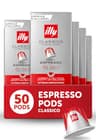
Thumb-tip sized, aluminum, cone-shaped with a domed top. The machine pierces it and forces water through under pressure, producing an espresso-sized serving with a layer of foam. Nespresso publishes three cup sizes for the line — Ristretto at 25 ml, Espresso at 40 ml and Lungo at 110 ml — and states that Original machines use Original pods only, in both aluminum and compostable capsule options. Because the Original format is widely copied, this is the system where third-party roasters compete, and that competition is why it is also the cheapest per cup.
Nespresso Vertuo — the wide domed disc
Much larger, wider than it is tall, like a jar lid. Nespresso states that the Vertuo design includes a unique barcode that the machine reads to set the ideal extraction for that blend, across six cup sizes from a 40 ml espresso up to a 535 ml carafe. That is the appeal and the catch in the same sentence: nothing to dial in, and nothing to change. Vertuo capsules are Nespresso’s own, so there is no cheap third-party tier.
The two-second test for a gift buyer: if the used capsule in their bin looks like a jar lid, it is Vertuo. If it looks like the end of your thumb, it is Original. If it looks like a small plastic cup with foil on top, it is a K-Cup. Our Vertuo vs Original comparison goes through the consequences of each in detail, and Keurig vs Nespresso covers the machine-level decision.
How we picked, in the order the criteria matter
1. Fit, which is not a preference
Every other criterion is a matter of taste. This one is a matter of geometry, so it comes first and it is non-negotiable. Each pick above states the system it fits on its card, and nothing on this page is recommended as a cross-system purchase.
2. A named roaster over a named flavor
The pod aisle sells two things: coffee from companies that roast coffee, and flavoring from companies that buy coffee. A box that leads with the roaster and the roast level is usually a better cup than one that leads with “caramel drizzle.” Five of the seven picks here are from roasters whose business is coffee first.
3. Enough pods to matter
A sleeve of ten is a sample. For a gift, the box should last long enough to become a habit — which in practice means 30 or more, with the iced pick as the deliberate stocking-sized exception.
4. Cost per cup, stated honestly
Pods are the most expensive way to drink coffee at home, and the spread between the picks on this page is wide: the Original-compatible variety pack works out at a fraction of the single-roast premium capsule. We have said so on the cards rather than ranking by price and pretending that is quality.
5. One honest reason to skip each one
Every pick carries its real objection: one-roast boxes are wrong for someone who likes variety, compostable pods depend on a local composting service, decaf is not caffeine-free. A gift list with no downsides is not a list, it is an advertisement.
Pods vs ground coffee vs beans, honestly
The honest hierarchy for taste runs: beans ground at brew time, then pre-ground coffee, then pods, and the gap is real. Coffee begins to lose aromatics the moment it is ground, which is why the National Coffee Association recommends buying whole beans in small amounts and grinding only what you are about to brew. A pod was ground months before it reached the cupboard. The sealed container slows the staling down — it does not reverse the grind.
What pods win on is everything that is not taste. One cup, no measuring, no grinder, no waste, no cleanup, no decision at 6:50am, and nothing to throw away in a half-full carafe. For an office drawer, a guest room, a one-coffee household or a second machine beside a proper setup, that is the right trade. If the person you are buying for is on the fence about leaving the system, how grinders actually differ and whole bean vs ground coffee are the two pages that explain what they would be gaining.
What about reusable pods?
A refillable filter basket — Keurig sells its own, and we carry it on the pod gift page— is the cheapest possible answer to both the cost and the waste objection, and it is the only way to put freshly ground coffee through a pod machine. It is also more work than the machine was bought to avoid: scoop, tamp lightly, brew, knock out, rinse. Our experience of the category is that reusable pods get bought with enthusiasm and used for about a fortnight, so we would not make one the whole gift. As the thing that sits next to a box of pods, for the one weekend cup they want to take seriously, it earns its place.
How to make pod coffee taste better without buying anything
- Use the smaller cup size. Almost every weak pod coffee is a pod brewed at too large a setting. The dose in the capsule is fixed, so a bigger cup is a more dilute one, not a stronger one.
- Run a water-only cycle first. It heats the brew path, and the first cup of the day otherwise comes out cooler than the rest.
- Descale on schedule. Pod machines fail invisibly, because there is no basket or carafe to look dirty. The NCA puts descaling at least every three to six months; the USGS explains why, noting that heated hard water forms solid deposits of calcium carbonate which can reduce the life of equipment. See how to clean a Keurig.
- Keep the box closed and out of the cupboard above the stove. Pods are well sealed but not immune; the NCA’s storage advice — cool, dark, away from heat and moisture — still applies.
- Buy two boxes of one good pod instead of six flavors. Variety packs are for discovering a preference. Once they have one, the kind thing to buy is more of it.
Who a box of pods is the right gift for
- Anyone with a pod machine and one supermarket brand. This is the single highest hit rate in coffee gifting: a guaranteed-compatible upgrade to something they already do every morning.
- An office, a guest room or a rental. No grinder, no mess, no instructions needed. Our Airbnb coffee maker guide covers the machine side of the same problem.
- A one-coffee-a-day household. Brewing a pot for one cup is the waste pods were invented to fix.
- An evening decaf drinker. One cup, no pot, nothing to clean at ten at night.
- A stocking or a gift basket. A 12-pod box of the iced pick or a sleeve of capsules fills a stocking better than a novelty mug. See coffee stocking stuffers.
And who it is the wrong gift for
Someone who grinds their own beans. For them a box of pods reads as a misunderstanding, however good the coffee in it is, and a bag of fresh beans at the same price is the gift they wanted. The other wrong recipient is anyone whose machine you have not actually seen — a Vertuo household handed Original capsules gets a box they cannot use and a receipt they have to ask you for. When in doubt, buy a bean sampler, which fits everything.