How we picked these
We have not tasted any of them, and we are not going to pretend otherwise — this is candy, taste is personal, and a ranking dressed up as a blind tasting would be invented. What we did instead was sort the field on the four things you can actually verify before you buy, in this order.
1. The coating, because it decides the whole gift
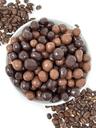
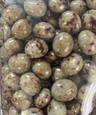
Dark chocolate keeps the bean tasting of coffee. Milk chocolate softens it into a sweet. White coatings bury it almost completely. A marbled bag splits the difference and looks the best in a bowl. There is no best coating in the abstract — there is only the right one for the person, and if you have no idea, a mixed bag is the move.
2. The size, matched to the occasion
This is where most people buy wrong. A one-pound resealable pouch is a pantry item; it works as a real present only if it is going into a jar or alongside something else. Six or seven ounces from a chocolate maker reads as a gift on its own. Two pounds is an office or party supply, and a bad buy for one person — it will soften before they get through it.
3. Resealable packaging
The National Coffee Association names coffee’s four enemies as air, moisture, heat and light. A chocolate shell adds a fifth problem of its own: warmth makes it bloom and go chalky. So a zip pouch is not a luxury on a bag of these, it is the difference between the last handful being good and being stale. Three of our picks publish a resealable pouch; the rest are better off decanted into a jar at home.
4. A named maker over an unbranded bulk packer
Chocolate-covered espresso beans are sold heavily in anonymous bulk. We favored bags whose seller is identifiable — a chocolate company, or a specialty-food name — over cheaper unbranded sacks of the same weight, because when something arrives melted or stale there is somebody to go back to. Every pick was confirmed in stock with a live price on the day this page was published, and the price on each button is pulled live rather than typed in by us.
What “espresso beans” actually means on a candy bag
There is no such thing as an espresso bean. Espresso is a brewing method: the National Coffee Association describes it as high pressure forcing nearly boiling water through a fine grind — ground “like table salt” — over 20 to 30 seconds, at roughly a 1:2 ratio of dry coffee to liquid. Any bean can be brewed that way. Our guide to what espresso is goes through it properly.
So what “espresso beans” means on a bag of these is simply whole roasted coffee beans, usually a darker roast, chosen because they are small, crunchy and strong enough in flavor to survive being coated in sugar. The NCA notes that dark roasts are shiny and oily on the surface and — this is the part that catches people out — that a dark roast’s strong flavor “is not associated with caffeine levels”. A darker, more roasted-tasting bean is not a more caffeinated one.
That matters for gift-buying in one practical way: if you are buying for somebody who grinds and brews, these are a treat, not an upgrade. They do not replace a bag of good coffee. If what you actually want is beans they can brew, go to our best espresso beans picks instead, and consider a bag of these as the small thing that goes with it.
The caffeine question, answered honestly
Here is what is published and what is not.
Published:the FDA’s own table puts regular brewed non-specialty coffee at 113 to 247 mg of caffeine per 12 fluid ounces, and says 400 mg a day — about two to three 12 fl oz cups — is the amount not generally associated with negative effects for most healthy adults.
Not published:how much caffeine is in one chocolate-covered bean. None of the six listings on this page gives a figure. One of them advertises a “natural caffeine boost” without quantifying it, which is marketing rather than data. And there is a structural reason the number would be hard to state even in good faith: it depends on the bean variety, its size, how dark it was roasted and how much chocolate is on it, and no bag on this page publishes a bean count per ounce.
What we would tell a gift buyer, then, is the practical version: treat these as caffeinated candy and do not hand the bowl to someone at 9 p.m. They are whole coffee beans, so the caffeine is real, and because they are sweet they are much easier to eat absent-mindedly than coffee is to drink. For anyone caffeine-sensitive, the honest gift is a good decafinstead — decaffeination removes roughly 97% of the caffeine per the NCA, and nothing equivalent exists in a candy aisle.
Match the bag to the occasion
A stocking stuffer or an add-on
Buy the 6 oz Madelaine bag. It is the one that looks like a present without any work from you, and it sits naturally next to a mug or a bag of beans. The rest of our small-gift picks are on the stocking stuffers page, and everything on coffee gifts under $25 plays the same role.
The main gift for a coffee drinker you do not know well
A pound of dark, decanted into a jar, is a better present than a pound of dark in its own pouch. This is the cheapest genuinely safe gift on this entire site: no compatibility, no counter space, no skill. If you want it to look like more, pair it with something small — our gift basket guide covers how to assemble that without it reading as a hamper of filler.
An office, a team or a party
Two pounds, dark, in a resealable bag. Dark chocolate survives a day in an open bowl better than milk does, and two pounds is the only size here that will not vanish in one morning. For the wider problem of buying for a team, our coworker gift picks and corporate gifting guide are the right starting points.
Someone who does not really drink coffee
The white-coated pack, or the marbled bag. Both are sweeter and far less coffee-forward, which is the point. Be aware that the white pack’s own listing says “chocolatey” rather than chocolate — standard labeling for a compound coating that is not legally white chocolate, and worth knowing if you are giving it to someone who would notice.
Dark, milk, white or marble
- Dark. The default, and the only coating that leaves the bean tasting like coffee. Least sweet, most adult, best in a shared bowl.
- Milk and dark mixed. The hedge, and genuinely the smart buy for a household or a gift to two people. You are not guessing.
- Marble. Buy it for how it looks. In a glass jar a marbled bag reads as a present; a plain brown bag reads as pantry stock.
- White. The sweetest, and the one that hides the coffee almost entirely. Right for a vanilla-latte drinker, wrong for someone who takes it black.
How to give them so they land
Three things make the difference between this reading as a thoughtful gift and as a bag of candy.
Decant anything over a pound. A jar of these on a desk is a gift; a zip pouch in a cupboard is groceries. An airtight coffee canister does the same job permanently, and keeps air and light off the chocolate.
Pair it with the thing it is a treat alongside. These go well with a mug, a bag of beans, or anything from our gifts for coffee snobs list for someone with real opinions. On its own, a pound of candy can read as filler. Next to something, it reads as a finishing touch.
Say what it is.Not everyone knows these are whole coffee beans inside the chocolate, and a few people will eat a dozen without registering it. A line on the card — “there is real coffee in these” — is both funnier and kinder than letting them find out at bedtime.
What we would buy instead, in two cases
If they own an espresso machine and no grinder. Candy is a nice gesture; a grinder changes every cup they make. Our espresso grinders under $100 page exists for exactly that budget, and a hand grinder costs about what two of the bigger bags here do.
If they drink capsules and complain about the cost. A bag of chocolate beans will not help. Our Nespresso alternatives page starts with a refillable capsule that costs less than most of the bags on this page and keeps paying back.