What espresso powder actually is
Every jar on this page starts as brewed coffee. The NCA describes instant coffee as coffee that has been brewed, concentrated and then dried by one of two methods: freezing it at −40°C to form granules (freeze dried), or spraying it into very hot air (spray dried), with the spray-dried powder then lightly steamed into the granules most people recognize. Add water and the coffee reconstitutes. That is it. There is no second brewing step and nothing left to extract.
Espresso powder is that same product made from a dark, espresso-style roast and then, in the baking versions, milled much finer so it disappears into a batter without leaving gritty specks. Fineness is the real difference between a baking jar and a coffee jar, and it is why the two are not freely interchangeable: the baking powders dissolve instantly in a wet mix, while a drinking granule needs liquid and a stir before it will vanish into a dough.
It also explains the one spec you will not find anywhere on this page: caffeine content. The NCA publishes no caffeine figures for instant coffee at all, and none of these listings publishes one either. We are not going to invent a number for a teaspoon of powder in a tray of brownies. If caffeine is the question, our caffeine in espresso guide covers what is actually measured, and caffeine in a cup of coffee covers the mug.
How we sorted the list
1. Which job is it for — baking or drinking?
This is the first and biggest filter, and it is the one most roundups blur. The first four picks are baking products: their listings sell them on dissolving instantly and deepening chocolate, not on tasting good in a cup. The last two are coffee: dark instant coffee from espresso-style roasts, sold to be drunk. Buying across that line is how people end up disappointed, so each card above names its job in the award.
2. Jar size against how often they will use it
A baking recipe uses a teaspoon or two. A 3 oz jar is therefore a year or more of brownies for a normal kitchen, and a 5 oz jar is a commitment. Our top pick is the middle size on purpose. The 1.75 oz jars are the right answer for someone who bakes a few times a year and would rather finish a small jar than keep a big one going flat.
3. What the listing actually publishes
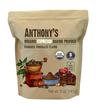
Coffee listings in this aisle are thin on specification, so the ones that publish something concrete earn a place. Civilized Coffee names 100% Colombian coffee; Anthony’s publishes organic, gluten-free and non-GMO certification; King Arthur publishes a kosher certification and a resealable 3 oz jar; Nescafe publishes the 3.5 oz / 100 g jar size. Where a listing publishes nothing — the Medaglia D’Oro jar does not state its size — we say so on the card instead of guessing, which is also why you should buy one jar before you buy a six-pack of it.
4. Would we give it as a present?
Mostly this is an add-on gift rather than a gift, and it is worth being honest about that. A jar of espresso powder is a brilliant thing to find inside a larger present — a baking gift, a chocolate box, a mug — and a slightly odd thing to receive on its own. The only picks here that stand alone are the drinking jars, and they stand alone because they solve a problem: a strong cup with nothing but a kettle.
Why a chocolate recipe asks for espresso powder at all
Because the jars are sold for exactly that. King Arthur’s listing bills its powder as a baking extract for rich chocolate flavoring; Anthony’s says plainly that it enhances chocolate flavor. The powder is not there to make the cake taste of coffee — at a teaspoon in a whole tray, it does not. It is there to deepen the chocolate, which is why recipes put it in brownies, frostings, chocolate cakes and tiramisu, and why leaving it out is the most common reason a home brownie tastes flatter than a bakery one.
Two practical notes that matter more than any spec. First, use the fine baking powders in dry mixes and the coarser coffee granules only after dissolving them in a little hot liquid. Second, keep the jar closed and dry. Instant coffee is dried coffee, and the NCA names air, moisture, heat and light as the four enemies of coffee generally — a jar left open in a steamy kitchen clumps. Our coffee storage guide covers the principle; for powder, the resealable jar does most of the work.
If they actually want to drink it
Then be clear-eyed about what you are buying. The two drinking picks here are good instant coffee from dark roasts, and they make the small, strong cup the brands are known for. Bustelo’s listing notes that it dissolves in hot or cold water, which makes it the cheapest route to an iced coffee with no equipment at all. Nescafe’s Gold Espresso Intense is the better base for a milk drink — a spoonful, a splash of water, then hot or cold milk on top — and with a cheap handheld milk frother it gets convincingly close to a cafe milk drink for someone with no machine.
But if drinking is the whole point and baking is not, a specialty instant is better coffee than either of these: freeze-dried single origins exist and they taste like coffee rather than like strength. That is a different page, and we keep it separate on purpose — see best instant coffee for the jars we would actually give a coffee drinker. And if the recipient owns a machine, stop buying powder: buy espresso beans, or decaf espresso if the issue is that they have stopped drinking caffeine in the evening.
What espresso powder will not do
It will not replace a shot. There is no pressure, so there is no crema and none of the texture that makes an espresso feel thick in the mouth — our what is espressoexplainer walks through what the machine is doing that a kettle cannot. It will not work as a substitute for ground coffee in a brewer, either: it is already-brewed coffee, so putting it in a drip basket or a French press gives you muddy water. And it is not a tool for stretching cheap beans — if the goal is better coffee rather than a flavor ingredient, the money is better spent on a decent bag of whole beans and a grinder.
Who each pick is for
The bakergets King Arthur, or Anthony’s if they bake weekly and buy organic. The occasional bakergets Civilized Coffee’s 1.75 oz single-origin jar, which will not sit around for three years. The recipe followerwho just wants the jar the instructions named gets Medaglia D’Oro, cheaply. The student, the office drawer, the hotel room get Bustelo. And the latte drinker with no machine gets the Nescafe jar and a frother, which is the closest this category comes to a genuinely useful gift on its own. If none of those is quite the person you have in mind, gifts for students and coffee gifts under $25 are the two pages that cover this price bracket properly.