Drip & Dose

How to Make Cold Foam

Cold foam is milk aerated without heat. That one word - without - is why a steam wand cannot make it and a $20 battery whisk can, and why the foam sits on the coffee instead of mixing into it.

By Stephen V.Last updated How we choose

How this is funded: we earn a commission if you buy through our links, at no extra cost to you. It never changes which gift we recommend, and we’ll tell you plainly when to skip one. Full disclosure.

Whisk cold milk hard for about twenty seconds, then pour it over the top of a cold coffee. That is cold foam. The cheapest handheld frother does it properly, which is unusual for a cafe technique — most of them need either a skill or a machine, and this one needs neither.

The reason it works is worth knowing, because it explains every mistake people make with it. A steam wand does two jobs at once: it heats milk and it whips air into it. Cold foam only wants the second job. So the tool for cold foam is anything that spins fast enough to force air into liquid — a battery whisk, a jug frother on its cold setting, a jar you shake, a French press plunger. A steam wand is not a cold-foam tool at all, and a lot of people with good espresso machines are reaching for the wrong attachment.

The method

  1. Start with cold milk, straight from the fridge. Not room temperature, not warmed. Cold milk holds foam better and you are about to pour it onto ice.
  2. Use a small amount.Two to four tablespoons is a drink’s worth — NIST puts a tablespoon at 15 mL, so that is roughly 30–60 mL of milk. Cold foam roughly doubles in volume, so a small puddle becomes a generous layer.
  3. Whisk in a narrow vessel. A tall, narrow cup or a measuring jug keeps the milk around the whisk instead of letting it climb the sides. Hold the whisk just below the surface, where it pulls air in.
  4. Stop when it mounds. Twenty to thirty seconds. You are looking for the point where the surface holds a soft peak for a second and the texture looks matte rather than bubbly. Over-whisking makes it stiff, and stiff foam sits on top like a lid instead of drinking nicely.
  5. Sweeten or flavour before you whisk, not after. Syrup, vanilla or a spoon of sugar whisked in dissolves completely. Added afterwards it sinks through the foam and takes the foam with it.
  6. Pour it over the back of a spoon onto a full glass. The glass needs to be full of coffee and ice, so the foam has somewhere to sit. Poured into a half-empty glass it just mixes in.

No source we cite publishes figures for which milk foams best or at what temperature, so this page deliberately does not invent any. In practice the cues above are the ones that matter, and the same honesty applies on our cappuccino guide, which avoids publishing a milk temperature for the same reason.

What to use, ranked by what it does

ToolTimeWhat you getVerdict
Handheld whisk frother20-30 secondsLight, pourable foamThe default - cheap, fast, nothing to wash but a wand
Electric jug frother with a cold settingAbout a minute, hands offEven, consistent foamBest if they make one every day
A jar with a lid, shaken30-60 seconds of shakingCoarser bubbles, collapses fasterWorks, no purchase needed, more effort
A French press plunger, pumped30 secondsDense foam, surprisingly goodFree if they already own one
A steam wandInstantHot milk - not cold foamThe wrong tool: steam heats as well as aerates

What to look for in a frother for cold foam

  1. A cold setting, stated on the listing. This is the only specification that matters and plenty of frothers do not have it. Both electric frothers below list hot and cold modes on their own listings; a frother that only heats is the wrong purchase for this job.
  2. Speed over capacity, for one drink. A handheld whisk spins faster than most jug frothers and costs a fraction as much. For a single drink it is genuinely the better tool, not the compromise.
  3. Capacity over speed, for a household. If two or three people want iced drinks at the same time, a jug that does a batch hands-free beats whisking three cups one at a time.
  4. Something easy to rinse. Milk sets on a whisk within minutes. A wand you can rinse under the tap in three seconds gets rinsed; a jug with a fixed base does not, and that decides whether the thing stays in use.
  5. A tall glass to pour it into.Cold foam needs a full glass of iced coffee underneath it, and an insulated tumbler keeps the ice from melting into the drink while they drink it — which our cold brew vs iced coffee guide identifies as the reason home iced coffee usually tastes watery.

The gear, picked for this

Three ways to make the foam and the glass it goes on. Prices are pulled live and dated on each button.
Quick picks

Sorted by who each one suits, with a live price you can act on. Tap a row to jump to the full write-up. We haven’t lab-tested these — here’s exactly what we do instead.

#ProductBest forPrice
1
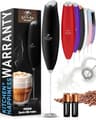
Zulay Handheld Milk Frother

Zulay Handheld Milk Frother

A battery handheld whisk that froths milk, matcha and hot chocolate in seconds. About the cheapest coffee gadget there is, and endlessly useful — the definitive tiny coffee gift.

Best for most people
$8.99 · View on Amazon

$16.9947% off

Price as of October 17, 2026. #ad How we’re funded

2
Nespresso Aeroccino 3 Milk Frother

Nespresso Aeroccino 3 Milk Frother

A one-button electric jug that makes hot or cold froth automatically — pour milk in, press once, done. The easiest way to give someone cafe milk drinks at home.

Best hands-off option
$49.99 · View on Amazon

Price as of October 17, 2026. #ad How we’re funded

3
Breville Milk Café Frother

Breville Milk Café Frother

A large-capacity electric frother with real temperature control and a big jug — the premium standalone frother for a household that makes a lot of milk drinks.

Best for a household
$199.95 · View on Amazon

Price as of October 17, 2026. #ad How we’re funded

4
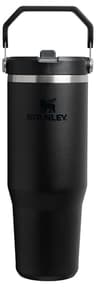
Stanley IceFlow 2.0 Flip Straw Tumbler (30 oz)

Stanley IceFlow 2.0 Flip Straw Tumbler (30 oz)

The vessel iced coffee is actually drunk from: a 30 oz vacuum tumbler with a fold-down straw, a carry handle and a base that fits most car cupholders. Stanley publishes cold retention of 12 hours, or two days with ice — which is the entire argument for it over a glass.

Best glass to put it on
$35.00 · View on Amazon

Price as of October 17, 2026. #ad How we’re funded

The picks in full

#1Best for most people

Zulay Handheld Milk Frother

A battery handheld whisk that froths milk, matcha and hot chocolate in seconds. About the cheapest coffee gadget there is, and endlessly useful — the definitive tiny coffee gift.

Great gift for: The perfect cheap-but-loved gift or stocking stuffer — everyone finds a use for it.

What’s good

  • Costs next to nothing
  • Froths milk, matcha, hot chocolate, protein shakes
  • No counter space needed

Worth knowing

  • Makes microfoam, not steamed-milk latte art
  • Skip it as a standalone 'main' gift — it's a lovely add-on, not a centerpiece
TypeHandheld battery whisk
Best forQuick froth, matcha, cocoa
PowerBattery

Specs read from the product listing, on July 25, 2026. Prices are pulled live and dated on the button.

#2Best hands-off option

Nespresso Aeroccino 3 Milk Frother

A one-button electric jug that makes hot or cold froth automatically — pour milk in, press once, done. The easiest way to give someone cafe milk drinks at home.

Great gift for: For the latte or cappuccino lover who wants foam without any technique — pure one-button convenience.

What’s good

  • Fully automatic hot or cold froth
  • Genuinely one-button simple
  • Consistent results every time

Worth knowing

  • Fixed batch size — not for making many drinks fast
  • Skip it if they want to learn latte-art steaming — that needs a steam wand
TypeElectric automatic jug frother
ModesHot + cold froth
Skill levelOne button

Specs read from the product listing, on July 25, 2026. Prices are pulled live and dated on the button.

#3Best for a household

Breville Milk Café Frother

A large-capacity electric frother with real temperature control and a big jug — the premium standalone frother for a household that makes a lot of milk drinks.

Great gift for: For a family or couple who make lattes and hot chocolate often and want a bigger, nicer frother.

What’s good

  • Large jug and adjustable temperature
  • Handles hot chocolate and latte milk well
  • Sturdier and more capable than a handheld

Worth knowing

  • Bulky and pricier than a jug frother
  • Skip it if one or two drinks a day is all they make
TypeElectric jug frother, temp control
ModesHot + cold, latte + cappuccino
CapacityLarge jug

Specs read from the product listing, on July 25, 2026. Prices are pulled live and dated on the button.

#4Best glass to put it on

Stanley IceFlow 2.0 Flip Straw Tumbler (30 oz)

The vessel iced coffee is actually drunk from: a 30 oz vacuum tumbler with a fold-down straw, a carry handle and a base that fits most car cupholders. Stanley publishes cold retention of 12 hours, or two days with ice — which is the entire argument for it over a glass.

Great gift for: For the person who buys a large iced coffee on the way to work every morning. It is the one thing on this list they will hold in their hand every day.

What’s good

  • A straw lid, which is how iced coffee actually gets drunk — not a hot-coffee sip lid
  • Stanley publishes 12 hours cold, and 2 days cold with ice
  • 30 oz holds a full large iced coffee with room for the ice
  • Recycled 18/8 stainless steel, dishwasher safe, fits most car cupholders

Worth knowing

  • It is drinkware rather than coffee, so pair it with beans or concentrate if it needs to feel like a whole present
  • Skip it for a hot-coffee drinker — a flip straw is the wrong lid for a hot drink
  • 30 oz is a lot of tumbler for a small bag or a crowded desk
TypeVacuum-insulated tumbler, flip straw lid
Capacity30 oz
Cold retention12 hours; 2 days with ice (manufacturer)
MaterialRecycled 18/8 stainless steel

Specs read from the product listing, on August 25, 2026. Prices are pulled live and dated on the button.

What to put it on

Cold foam is a topping, so the drink underneath decides how it tastes. Three sensible bases:

  • Cold brew.The classic pairing, and the one that benefits most. The National Coffee Association describes cold brew as a coarse grind steeped in room-temperature or cooler water at a 1:4 to 1:5 ratio for approximately twelve hours, which means it leaves the jug as a concentrate — so it is strong enough that a layer of unsweetened foam softens it rather than drowning it.
  • Iced coffee.The NCA draws the line between the two itself: iced coffee is “brewed hot using a standard method, then cooled down”. It is more dilute than cold brew, so sweeten the foam a little if the drink is going to taste of anything.
  • Espresso over ice.Pull the shot straight onto the ice, then float the foam. This is the fastest of the three and the closest to an iced macchiato — see what a macchiato is for why the order of pouring changes the drink.

Why your cold foam sank

  • The glass was not full. Foam needs to land on a surface near the rim. In a half-full glass it falls through the coffee and disperses.
  • The milk was not cold. Room-temperature milk foams and then gives up, especially when it meets ice.
  • You whisked too long. Stiff foam breaks into chunks and sinks in lumps. Soft, matte and barely holding a peak is the target.
  • Sweetener went in last. Syrup poured on top drags the foam down with it. Whisk it in from the start.
  • You poured it in the middle. Pour over the back of a spoon near the edge, so the foam spreads across the surface instead of punching through it.

As a gift

A frother is one of the few coffee presents that works no matter what makes the coffee — drip machine, pods, French press, even instant. That makes it the sensible gift for someone whose setup you do not know, and the cold-foam capability is the part that gets used in summer rather than only in January. Pair a handheld whisk with a bag of cold brew coffee and you have a complete present for under the price of two coffees out.

Frequently asked questions

What is cold foam?

Milk aerated without heat, poured on top of a cold coffee. Because there is no steam involved, the foam stays cold and sits as a distinct layer on the drink instead of mixing in the way steamed milk does. It is made with a whisk or a frother on its cold setting, not with a steam wand.

Can you make cold foam without a frother?

Yes. Shake cold milk in a sealed jar for 30 to 60 seconds, or pump it in a French press plunger for about 30 seconds - both aerate milk mechanically, which is all cold foam needs. The foam is coarser and collapses faster than a whisk's, but it works with nothing new bought.

Why can't you make cold foam with a steam wand?

Because steam heats as well as aerates - that is what steam is. A wand will give you hot textured milk, which is a different ingredient. Cold foam needs mechanical aeration only, which is why a cheap battery whisk is the right tool and an expensive espresso machine is not.

What milk is best for cold foam?

No source we cite publishes a comparison, so we will not rank them: in practice, use what they drink. The practical cues are the ones on this page - cold from the fridge, a small amount, whisked in a narrow vessel, stopped as soon as it mounds and looks matte rather than bubbly.

How long does cold foam last?

Minutes, not hours - it is a topping, so make it last and pour it straight away. If it has to wait, keep it cold and give it a few seconds of whisking again before pouring. Over-whisked foam breaks down faster, not slower.

How do you sweeten cold foam?

Whisk the sweetener in before you aerate the milk. Syrup, vanilla or sugar added afterwards sinks through the foam and takes the foam with it, which is the most common reason a carefully made layer disappears on contact with the drink.

What coffee goes under cold foam?

Cold brew is the classic, because the NCA's 1:4 to 1:5 ratio leaves it as a concentrate strong enough to carry an unsweetened layer of foam. Iced coffee - brewed hot then cooled, by the NCA's own definition - is more dilute, so sweeten the foam slightly. Espresso poured over ice is the fastest option.

Sources

  • National Coffee Association — Cold Brew Coffee — NCA on cold brew: coarse grind ("like rock salt"), a 1:4 to 1:5 coffee-to-water ratio, room-temperature or cooler water, approximately 12 hours of contact (with a range from minutes to 12–18+ hours), straining through a paper, cloth or fine mesh filter, and the distinction from iced coffee — which is "brewed hot using a standard method, then cooled down" (accessed August 18, 2026)
  • NIST — Metric Kitchen: Cooking Measurement Equivalencies — NIST's approximate equivalents that "may be used for home cooking applications": 15 mL = "1 tablespoon (1/2 fluid ounce)", 30 mL = "1 fluid ounce", 180 mL = "6 fluid ounces (3/4 cups)", 240 mL = "1 cup", 720 mL = "24 fluid ounces (3 cups)", 28 g = "1 ounce (by weight)", 454 g = "1 pound (16 ounces)" (accessed September 18, 2026)
  • Merriam-Webster — latte — Merriam-Webster defines a latte as "espresso mixed with hot or steamed milk : caffe latte", and also "a similar drink made with an ingredient (such as rooibos or chai) other than espresso" (accessed September 18, 2026)

Keep reading