Why the grind matters more than the bag
If you only change one thing about somebody’s press coffee, change the grind. A French press needs a coarsegrind — the National Coffee Association is explicit about it — and the reason is mechanical rather than aesthetic. The mesh screen only holds back particles bigger than its holes. Grind too fine and the dust goes straight through, which gives you silt in the bottom of the cup, a gritty last mouthful, and coffee that keeps extracting after you have poured it, turning bitter in the mug.
This is also why a blade grinder is a poor match for a press. A blade chops beans into a mixture of boulders and powder, and the powder is exactly what the mesh cannot stop. A burr grinder set coarse produces particles of roughly one size, which is the whole trick — burr vs blade explains the difference, and the grind size guide shows where a press sits relative to every other method.
So if the gift is beans, be honest with yourself about whether the person receiving them can grind coarse. If they can, buy whole bean and buy the best you can. If they cannot, buy a coarse pre-ground bag — which is genuinely fine, and far better than whole beans they will grind badly.
Which roast suits a press
Dark roasts: the traditional match
The classic press coffee is a dark roast, and there is a reason it became the default. The NCA notes that dark roasts are shiny and oily on the surface, and those oils are precisely what a metal mesh lets through. In a press, a dark roast gives you a thick, low-acid, chocolatey cup that tastes the way most people picture French press coffee. It is also the safest gift for somebody who currently drinks strong coffee from a drip machine.
Medium roasts: the versatile choice
A good medium roast gives up a little of that heaviness and gets sweetness and fruit in return, and it has the practical advantage of working in the recipient’s other brewers too. If they own a press and a drip machine, or a press and a pour-over, a medium roast is the bag that does not need to be allocated to one of them — which makes it the better gift when you are not sure what else is in the kitchen.
Light roasts: possible, but not the gift
Very light, delicate coffees can be excellent in a press in the right hands, but they need care with dose and time, and the immersion body works against their clarity. They are also expensive, so a bag that lands wrong is a wasted present. If the person you are buying for specifically loves bright, fruity coffee, they are usually a pour-over drinker — see best beans for pour-over and drip instead. Our light vs dark roast guide covers what the label is actually telling you.
The coarse pre-ground option, without apology
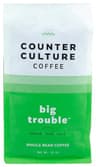
One of the picks above is sold coarse ground and marketed for cold brew. It is on this page deliberately, because coarse ground is exactly what a French press wants, and cold brew and press coffee ask for the same particle size for the same reason: both are long immersions separated by a filter that lets fines through.
For a gift buyer this solves a real problem. Handing somebody a bag of whole beans when they own no grinder creates a chore rather than a pleasure, and supermarket pre-ground is usually milled for drip machines — far too fine for a press, which is why so much home press coffee is silty and bitter. A bag ground correctly for immersion sidesteps both. The trade-off is freshness: ground coffee stales faster than whole beans, which the NCA puts at one to two weeks against one to three for beans, so buy a size they will finish. Whole bean vs ground sets out that trade in full.
How much coffee a press actually uses
Worth knowing before you decide what size bag to buy, because a press gets through coffee faster than people expect. Immersion brewing uses a generous dose relative to the water, and a press is usually made for more than one person, so a household with a press works through a bag noticeably quicker than one making single cups in a dripper.
The gift-buying consequence: a larger bag is often the better present for a press household, and a sampler of several small bags is a better present for somebody making one cup at a time. If you want the variety route regardless, coffee gift sets and samplers covers the boxes that work like a subscription in a single gift.
Storing it so the last cup is as good as the first
The NCA lists coffee’s enemies as air, moisture, heat and light, and a press household usually keeps its coffee next to the kettle, which is warm, and in the original bag, which is open. An airtight container away from the hob costs very little and does more for the taste of the last third of the bag than trading up to a more expensive coffee would.
Do not keep it in the fridge — that is moisture and odor, not preservation. Full detail, including the honest answer on freezing, is in how to store coffee beans.