What a drip machine does to coffee
Hot water sits on the bed of grounds for about five minutes and leaves through a paper filter. Two consequences follow, and they decide the whole shortlist.
Long contact rewards body.With that much extraction time, a bean with sweetness and heft gives you a full cup; a light, acidic bean gives you its sharp edges and little else. That is why every top pick here is a medium or a dark roast. The NCA’s roast guidance is a useful sanity check: dark roasts are shiny and oily from longer roasting, and their strong flavor is not associated with caffeine levels. You are buying flavor, not strength.
Paper filters strip oils. A paper filter gives you a cleaner cup than a French press, and it also takes some of the body with it. A bag with chocolate and nuttiness survives that; a delicate floral coffee does not.
If their machine is a pour-over cone rather than an automatic drip brewer, the answer changes — the NCA’s pour-over guidance asks for a 1:13 to 1:16 ratio and 2 to 4 minutes, which is a different brew. Go to coffee beans for pour-over instead.
Grind: the part people get wrong
A drip machine wants a medium grind, like kosher salt. Two common failures, both fixable for free:
- Too fine and the water backs up in the basket, the brew runs long, and the cup goes bitter. This is what happens when somebody uses espresso-ground coffee in a drip machine.
- Too coarse and the water runs straight through. The cup tastes weak and sour, and adding more coffee makes it worse rather than better.
If they own a grinder, grind medium and grind that morning. If they do not, buy a bag ground for drip — two of the picks above are, and our ground coffee under $25 page sorts the cheaper options by the grind they are ground for. If you want to fix the root cause, a grinder is the gift that improves every cup after it: start with our grinder picks and read burr vs blade first, because a blade grinder cannot produce an even medium grind at all.
How much coffee per pot
The NCA’s Golden Ratio is one to two tablespoons of ground coffee per 6 fl oz of water. Two things make that confusing in a real kitchen, and both are worth knowing before you blame the beans:
First, a “cup” on a coffee maker is not a cup. Carafe markings are usually 5 to 6 fl oz per cup, while NIST’s kitchen equivalents put a US cup at 240 mL and 6 fl oz at 180 mL. A “12-cup” machine makes about nine mugs. Second, a tablespoon is a volume, not a dose — NIST gives 15 mL for one tablespoon — so a tablespoon of coarse dark roast weighs less than a tablespoon of fine medium roast. If the cup tastes weak, add coffee before you change beans. Our coffee-to-water ratio guide works through it properly, and how many cups are in a pound tells you how long a bag will actually last them.
How we chose these six
1. It has to survive five minutes of hot water
Every pick is a medium, medium-dark or dark roast with published body or chocolate-leaning notes. No delicate light roast is on this page, not because light roasts are worse but because a drip basket is the wrong place for one. The light-roast shortlist lives on its own page.
2. Two pre-ground bags, deliberately
Most drip households do not own a grinder, and a whole-bean gift to somebody with no grinder is a chore disguised as a present. The Caribou and the Peet’s decaf are both ground, so they work the morning they arrive.
3. Cost per ounce matters here more than anywhere
A drip household drinks pots, not cups. A 12 oz specialty bag can be a week. The budget pick is 20 oz and the big-batch pick is 40 oz for that reason — although the NCA’s shelf life figures (one to three weeks for beans, one to two for ground) are the reason we would not go bigger than that, even for a heavy-drinking house.
4. A decaf that is not an afterthought
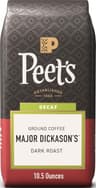
Decaffeination removes roughly 97% of the caffeine per the NCA, leaving about 2 to 15 mg a cup against about 95 mg for regular coffee — so a decaf drip pot after dinner is a real option rather than a compromise. Peet’s decaf Major Dickason’s is the same blend as our top pick, which is the whole point. More on decaf that is worth drinking.
5. No tasting scores
We have not brewed these side by side in the same machine, so there is no score column. The flavor words here are the roasters’ own published descriptions and the brewing figures are the NCA’s; the ranking is argued fit, as documented on how we choose.
Which bag to buy, by household
- Makes a full pot every morning— Major Dickason’s. It is built for exactly that cup, with or without milk.
- Drinks a lot and watches the budget— Caribou Daybreak, and keep the change.
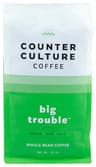
- Wants something nicer without going strange— Three Sisters or Big Trouble. Both are specialty bags that still behave in a drip basket.
- Drinks coffee after 6pm— the Peet’s decaf, and nobody has to taste the difference.
- An office or a big family— the 40 oz Royal Kona blend. Also see coffee makers for an office.
- Needs a new machine too — our drip machine picks, or the best coffee makers under $200 if the gift has a cap on it.
One last thing worth saying to anyone buying for a drip household: if the coffee tastes stale and nobody can say why, it is usually the machine rather than the bag. The NCA recommends descaling a drip brewer at least every 3-6 months to clear mineral buildup from tap water, and a neglected machine makes any coffee taste flat. Our descaling guide is fifteen minutes of work and the cheapest upgrade in coffee.