Buy the grind, not just the roast
With whole beans you choose the grind at home. With ground coffee somebody has already chosen it for you, and that choice is the single biggest difference between these six bags. The NCA’s own brewing guidance gives the three reference points:
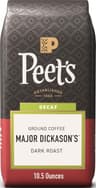
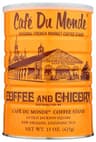
- Medium, like kosher salt— drip machines and most pour-over cones, with roughly five minutes of contact and the Golden Ratio of one to two tablespoons per 6 oz of water. The Caribou, the Peet’s decaf and the Café du Monde are all in this band.
- Coarse, like rock salt— French press and cold brew, where the grounds sit in water for minutes or hours and a fine grind turns the cup to mud. Stone Street and Bizzy are both ground coarse on purpose.
- Fine, like table salt— espresso, pressurized in 20 to 30 seconds. Almost nothing on a supermarket shelf is ground this fine, which is why an espresso household should buy an espresso-specific bag.
One more category sits off that scale entirely: Turkish coffee, which needs a powder finer than espresso. That is on our Turkish coffee pot page because the pot and the grind have to be bought together.
What ground coffee gives up, honestly
Freshness, and nothing else that matters. The NCA puts roasted whole beans at one to three weeks at room temperature and ground coffee at one to two weeks, and names coffee’s greatest enemies as air, moisture, heat and light. Ground coffee has far more surface area exposed to all four, so it goes flat faster. That is the whole trade.
Two practical consequences for a gift:
Buy a size they will finish. A 20 oz bag in a household that drinks a pot a day is about two weeks, which is right. The same bag in a one-cup-a-day house is two months, and the last half tastes like cardboard. For a light drinker, buy the small bag and spend the difference on something else.
Give it somewhere to live. An airtight canister is the cheapest way to slow all four enemies down, and it makes a pre-ground bag noticeably better in week two. Ours are on best coffee canisters. What does not help is the freezer door — repeated thawing is moisture, and moisture is on the NCA’s list.
And the obvious alternative, stated plainly: if you want to fix the root cause rather than work around it, buy a grinder. A burr grinder turns every future bag into fresher coffee, and our grinder picksstart below the price of several of the bags on this page’s sister lists. Just don’t gift whole beans to a grinderless house as a hint — that lands as homework.
Why these six under $25
1. Under the cap with a live price
Every bag was verified in stock with a live price under $25 as of November 23, 2026. Nothing is on this page because it was cheap during a sale last month, and the cap is a real cap — two bags we would otherwise have included, the ground Royal Kona Private Reserve and the Mehmet Efendi Turkish tin, sit above it and are left out rather than fudged.
2. Grinds that do not overlap
Three medium-ground bags for drip, two coarse for immersion, and one dark can that works in both a drip machine and a phin. No two bags here are the same grind doing the same job at a slightly different price.
3. Cost per ounce, not sticker price
The budget pick is 20 oz, which is a half-pound more than a standard specialty bag — that is why it wins on value rather than on being the lowest number. A cheap 10 oz bag can cost more per cup than a bigger bag that looks dearer on the shelf.
4. A decaf that is the same blend as a regular pick
Decaffeination removes roughly 97% of the caffeine per the NCA, leaving about 2 to 15 mg per 8 oz cup against about 95 mg for regular coffee. Peet’s decaf Major Dickason’s is the decaf version of a blend we recommend at full strength elsewhere, which is the most reliable way to buy a decaf nobody complains about. More on decaf worth drinking.
5. No tasting scores
We have not brewed these side by side and there is no number column on this page. The flavor descriptions are the roasters’ own published notes and the brewing figures are the NCA’s; the ranking is argued fit for a grind and a budget. See how we choose.
Which bag, by what they own
- A drip machine— Caribou Daybreak. Medium ground, big bag, hard to dislike. The fuller shortlist is on coffee for drip coffee makers.
- A cold brew jug— Stone Street if they want it dark and classic, Bizzy if organic matters. Both are ground coarse so no grinder is needed. See cold brew makers.
- A French press — either coarse bag above works. Our French press picks include whole-bean options if they do have a grinder.
- A phin, or a sweet condensed-milk habit— the Trung Nguyen can. It is the coffee the drink is built around.
- Nothing in particular, and a tight budget— the Café du Monde chicory can. Cheap per ounce, dark, and it behaves in both a drip machine and a phin.
- An espresso machine— none of these. Buy a bag ground for espresso from best espresso beans, or the instant espresso on best instant espresso powder if it is for baking.
Last word on the price cap. Twenty-five dollars buys a lot of ground coffee — two of the bags here are over a pound — so if the gift feels small, the answer is not a bigger bag that will go stale. Pair a bag with a mug or a canister and the present reads as considered rather than cheap, which is also the argument our gifts under $25 page makes at greater length.